Avantika
Key takeaways
- Treat security as a business risk tied to customer trust, legal liability and how quickly you can close deals.
- Map your data and understand the shared responsibility model before buying any tools.
- Strong identity controls, namely MFA, SSO, least privilege and fast offboarding, give the highest return for early-stage teams.
- Tenant isolation is the central technical risk in SaaS, so enforce it in one place and test it automatically.
- Privacy laws follow the data subject, so GDPR, UK GDPR and India's DPDP Act can apply wherever you are based.
- Pursue SOC 2 or ISO 27001 when deals require them and the basics are already working.
Most SaaS founders meet security for the first time through a sales call. A prospective customer sends a 150-question security questionnaire, asks for a SOC 2 report, or wants a data processing agreement signed before the pilot starts. If nobody has thought about security until then, the deal stalls and the team scrambles to answer questions about systems it never documented.
The problem is not only external. Startups move fast, share credentials, connect new tools every month and store customer data in places nobody has mapped. Each of those habits is reasonable on its own. Together they create the gaps that attackers, auditors and enterprise buyers find first.
This guide explains the security and compliance basics a SaaS company needs in its first years: how to understand your data and responsibilities, which controls matter most, how privacy laws apply, when SOC 2 or ISO 27001 make sense, and what to do in what order.
It is written for founders, CEOs, CTOs and product leaders at early-stage and growing SaaS companies who are not security specialists but are accountable for the outcome.
Why security is a business problem before a technical one
Security reaches a founder's balance sheet through three exposures: customer trust, legal liability and sales friction. Lose trust and customers leave. Miss a legal duty and regulators can fine you. Fail a buyer's review and a deal stalls.
The cause is rarely exotic. Verizon's 2025 Data Breach Investigations Report (opens in a new tab) analysed over 22,000 incidents, including 12,195 confirmed breaches. Credential abuse (22%) and exploitation of vulnerabilities (20%) were the leading initial access vectors. Stolen logins and unpatched systems do most of the damage.
The costs are real. IBM's 2025 Cost of a Data Breach Report (opens in a new tab) put the global average at USD 4.44 million, down 9% from USD 4.88 million, the first fall in five years. The US average was a record USD 10.22 million (opens in a new tab). These are averages across mostly larger organisations, so a small SaaS company will not map one-to-one.
What buyers check before they sign
Enterprise buyers typically send a security questionnaire, ask for a SOC 2 report and request a data processing agreement. Weak answers slow the deal, and closing those gaps later costs far more than designing for them early.
Know your data and your share of the responsibility
Map where data lives
Start with a simple data map. List the personal and business data your product stores, then record where each type sits: the production database, backups, logs, analytics tools and support systems. Note who can access it and why. Customer emails pasted into support tickets or stack traces written to logs are common places where data ends up unnoticed. An IT infrastructure audit is a useful way to surface these locations.
Classify it once, reuse it everywhere
Sort each data type into one of four classes, then apply the same rules to access, retention and encryption.
- Public: marketing pages and published documentation.
- Internal: roadmaps and operating procedures.
- Confidential: customer contracts, source code and business data.
- Regulated: personal data, payment data and health data.
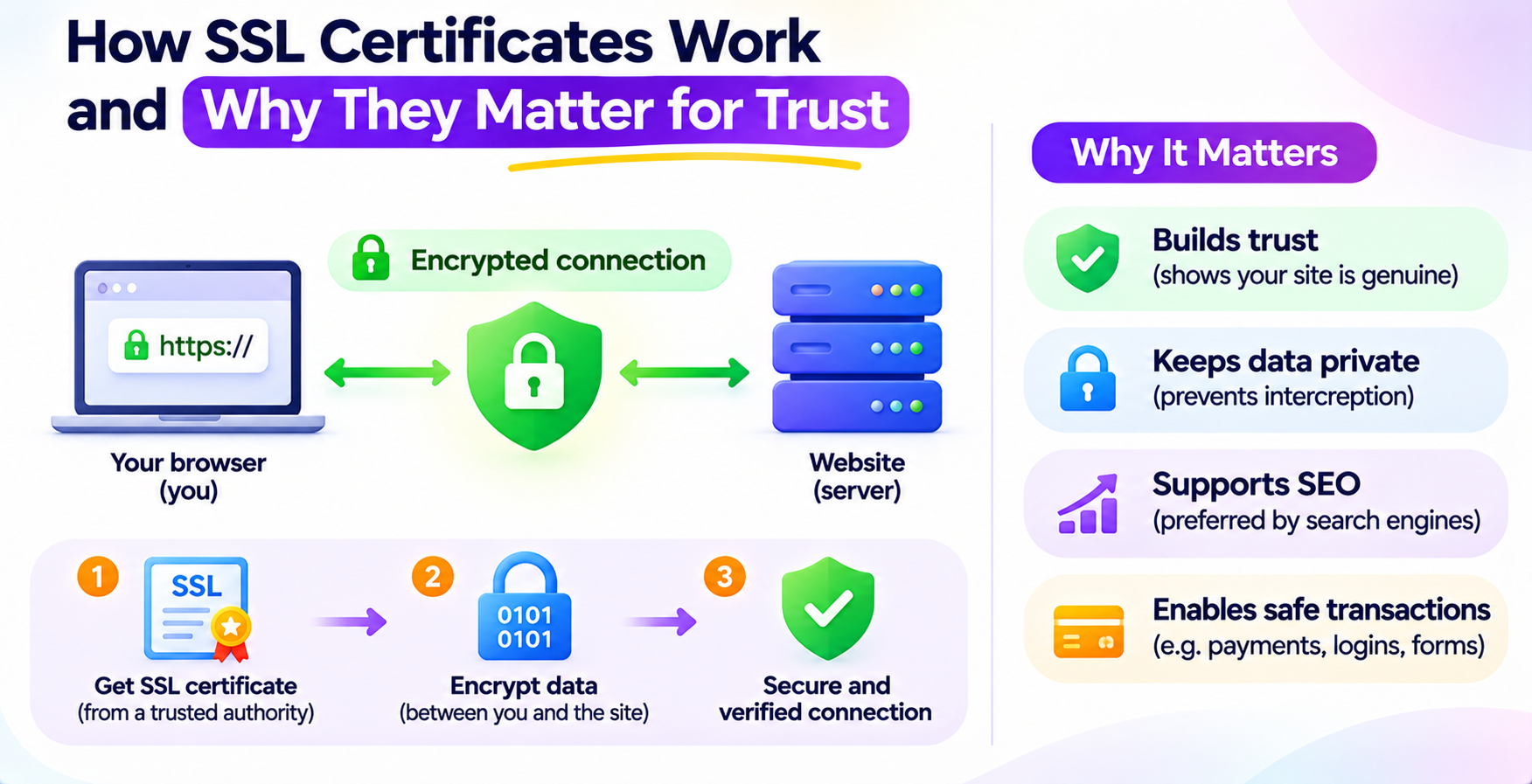
Cloud providers secure the underlying infrastructure, such as data centres and hardware. You remain responsible for your configuration, access controls, code and data. Your customers face the same split with you: you run the platform, but they decide who gets accounts and what they upload.
Finally, collect less. Data you never store cannot be breached or requested in an access request.
Identity and access control: the highest-return basics
Stolen credentials were the most common initial access vector in Verizon's 2025 Data Breach Investigations Report (opens in a new tab), at 22% of breaches. Few controls reduce risk as much for as little effort.
Why it causes failure
Shared and reused passwords, orphaned accounts of former staff and API keys left in code give attackers easy entry. Credential stuffing made up 19% of authentication attempts (opens in a new tab) on a median day in the SSO logs Verizon analysed. Leaked secrets in GitHub repositories took a median of 94 days (opens in a new tab) to remediate.
How to avoid it
- Enforce MFA on every staff account, especially cloud consoles, source control, email and your product's admin panel.
- Use single sign-on and a password manager so nobody reuses or shares passwords.
- Apply least privilege through role-based access, so people hold only the permissions their job needs.
- Offboard on the day someone leaves and review access quarterly.
- Keep secrets out of repositories. Use a secrets manager, run secrets scanning and rotate any leaked key immediately.
Finally, offer SSO and MFA to your customers. Larger buyers will ask for both before they sign.
Building security into the product
Isolating customers from each other
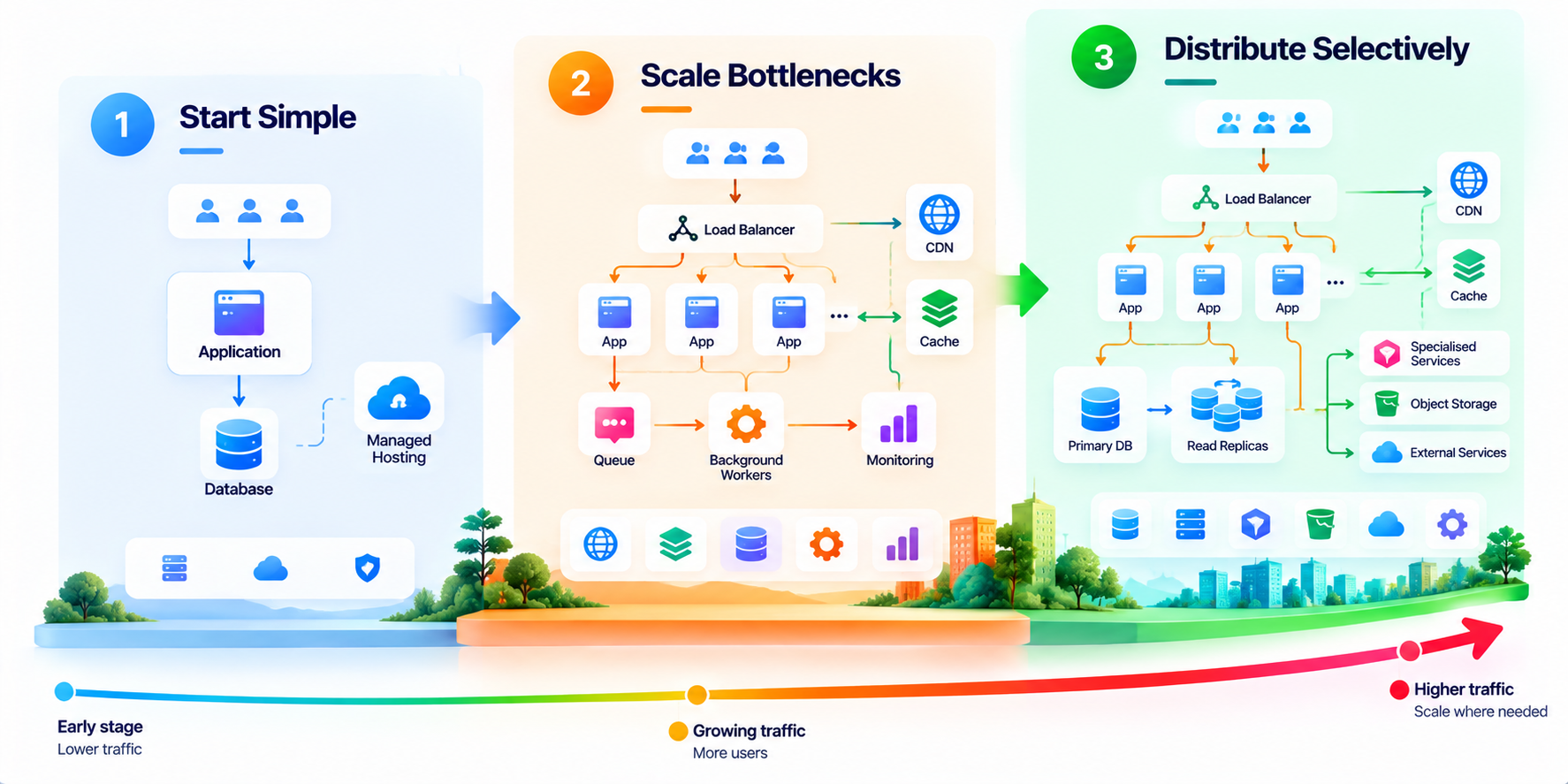
Tenant isolation is the defining risk in SaaS: one flaw in access logic can expose every customer's data. Design it from the start. A shared database with a tenant ID on each record is cheapest but relies on perfect filtering. A schema per tenant adds a stronger boundary. A database per tenant isolates best and costs the most to run. Your choice also shapes query performance.
Enforce tenant checks in one central layer, not in each endpoint, and write automated tests that deliberately attempt cross-tenant access.
Patching and dependencies
Exploitation of vulnerabilities as an initial access vector grew 34% year on year and accounted for 20% of breaches in Verizon's 2025 DBIR (opens in a new tab). Verizon's analysis reported a median remediation time of 32 days (opens in a new tab). Use code review, dependency scanning and a regular patching schedule, and test against the OWASP Top 10.
Encrypt data in transit with TLS and at rest using managed keys. Secure your APIs with authentication, rate limiting, input validation and least-privilege scopes, as covered in our guide to API-first SaaS.
Write these requirements into your software requirements document so they are built, not assumed. Commission a penetration test before major enterprise deals and after major releases.
Infrastructure, logging, backups and incident response
Start with cloud basics. Keep production separate from development, restrict network exposure to what the product needs, define environments as code so changes are reviewed, and give service accounts only the permissions they use. Zero One Creation's cloud infrastructure and deployment automation work follows this same discipline.
Logging you will be glad to have
Record sign-ins, admin actions and data exports, and alert on unusual behaviour. Without logs you cannot investigate, and auditors will ask for them. Speed matters commercially: IBM's 2025 report put the mean time to identify and contain a breach at 241 days, and breaches found by the company's own team averaged USD 4.18 million against USD 5.08 million when the attacker disclosed them.
Backups should be encrypted, stored separately from production and restore-tested. An untested backup is an assumption.
What an incident plan needs to say
Write a one-page plan before you need it. It should name:
- Who leads the response
- Who decides on customer and regulator communication
- How evidence is preserved
- How the post-incident review happens
Run a tabletop exercise once a year so the plan is familiar.
Vendors, integrations and AI tools
A SaaS company is built on other services: cloud hosting, payments, email, analytics, support tools and, increasingly, AI APIs. Each one holds some customer data or has access to your systems, so each one extends your attack surface. Verizon's 2025 DBIR found that third-party involvement in breaches doubled from 15% to 30% (opens in a new tab).
Start with a vendor register that records what each vendor does, what data it touches and who owns the relationship. Before adopting a new vendor, review its SOC 2 report, ISO 27001 certificate and data processing terms. Grant integrations the narrowest access scope they need, and remove any you no longer use.
Shadow AI deserves its own attention. Staff paste customer data into unapproved AI tools because it saves time, not out of bad intent. In IBM's 2025 report, high levels of shadow AI added USD 670,000 to the average breach cost (opens in a new tab). Write a short, clear AI usage policy that says which tools are approved and which data must never be entered.
Customers will assess you the same way, so keep a current list of subprocessors ready to share.
Privacy laws that apply to SaaS companies
Privacy law follows the people whose data you process, not where your company is registered. An Indian SaaS company with European users falls under GDPR. One processing personal data of people in India falls under the DPDP Act.
GDPR and UK GDPR
GDPR fines reach EUR 10 million or 2% of worldwide turnover at the lower tier, and EUR 20 million or 4% at the upper tier, whichever is higher. UK GDPR caps are GBP 8.7 million or 2%, and GBP 17.5 million or 4%. Regulators set real fines case by case, so the caps matter less than your conduct.
India's DPDP Act
The DPDP Rules were notified in November 2025 and apply in phases. Most obligations, including notice, security safeguards, breach notification and data rights, apply from 13 May 2027. Penalties reach INR 250 crore for failing to keep reasonable security safeguards.
What both expect from you in practice
- A lawful basis or valid consent, and a clear privacy notice.
- A data processing agreement with customers, since you are usually the processor.
- Handling of access and deletion requests.
- Reasonable security safeguards.
- Breach notification, with 72-hour reporting windows to regulators. Confirm exact deadlines with counsel.
HIPAA covers US health data and PCI DSS covers card data. Using a payment processor shrinks your card-data scope. This is general information, not legal advice, so have a lawyer review your contracts and notices.
SOC 2, ISO 27001 and when to pursue them
SOC 2 is an attestation report, not a certification. An independent CPA firm examines your controls against the AICPA Trust Services Criteria (opens in a new tab). Security is mandatory. Availability, Processing Integrity, Confidentiality and Privacy are optional, so start with Security and add the others when customers ask.
SOC 2 Type 1 and Type 2
Type 1 evaluates control design at a single date. Type 2 also tests operating effectiveness over a window, typically 3 to 12 months. Enterprise buyers usually prefer Type 2, and Type 1 is a reasonable first milestone. Reports are normally shared under NDA, while SOC 3 covers the same criteria without the detail and can be distributed freely.
ISO 27001 as an alternative
ISO 27001 is an international standard for an information security management system, certified by an accredited auditor. US buyers usually ask for SOC 2, while enterprise buyers in Europe, the Middle East and Asia often ask for ISO 27001. Treat that as a pattern, not a rule, and check with your prospects.
How to know it is time
Pursue an audit when a real deal depends on it, or when enterprise prospects ask in more than one sales cycle. Until then, the basics from the earlier sections are most of what an auditor checks. Compliance automation tools can collect evidence, but they do not replace the controls themselves.
A practical first-year security roadmap
Use this as a guide, not a fixed schedule. Timing shifts with team size, product complexity and customer demands, and no checklist guarantees compliance with any law or standard.
- Month 1: MFA on every account, a password manager, an inventory of data and vendors, and an offboarding checklist.
- Months 2 to 3: role-based access, secrets management, backups with a restore test, logging, and a written incident plan.
- Months 4 to 6: tenant isolation tests, dependency scanning, a penetration test, and a privacy notice and data processing agreement reviewed by counsel.
- Months 7 to 12: a policy set, access reviews, vendor reviews, then a SOC 2 readiness assessment if deals require it.
Controls added early are cheaper than controls retrofitted later. Zero One Creation supports this through technology consulting, custom SaaS platform development and cloud and DevOps work, building these safeguards into the architecture from the start. Learn more at zeroonecreation.com.
Frequently Asked Questions
No law requires SOC 2. It becomes necessary in practice when customers, usually mid-market and enterprise buyers, ask for it before signing. Start once the basics are in place and you see repeated requests in sales conversations, because a Type 2 report needs a period of evidence and cannot be rushed.
SOC 2 is an attestation report issued by an independent auditor against the Trust Services Criteria, and it is most requested by US customers. ISO 27001 is an international standard that certifies your information security management system. Both examine similar controls, so work done for one usually helps with the other.
Yes, it can. GDPR applies when you offer services to people in the EU or monitor their behaviour, wherever your company is located. It also applies when you process personal data on behalf of customers who are themselves subject to it, which is why many contracts include a data processing agreement.
The Digital Personal Data Protection Act regulates the processing of digital personal data connected to India. In practice it means giving clear notice, obtaining valid consent where required, applying reasonable security safeguards, honouring individuals' rights and handling breaches responsibly. Check the current rules and timelines with legal counsel, as implementation is phased.
Start with multi-factor authentication, least-privilege access, a secrets manager and prompt offboarding. Add tenant isolation tests, dependency scanning, encryption, tested backups and basic logging with alerts. These cover the most common causes of breaches at a cost a small team can carry.
Follow your incident plan: contain the issue, preserve logs, assess what data was affected and bring in legal and technical help early. Then notify regulators and customers within the deadlines that apply to you. GDPR, for example, generally requires notifying the supervisory authority within 72 hours of becoming aware of a reportable breach. Afterwards, review the cause and fix it.