React JS development company in India for fast, maintainable web applications

We build React applications, dashboards and design systems that stay fast and easy to change as they grow, and provide React developers who work inside your team.

  • Free strategy call
  • Custom quotation, never a fixed package
src/features/orders/OrdersTable.tsx
1// Typed, tested and fast with large data2export function OrdersTable({ status }: Props) {3  const { data, isLoading } = useOrders({ status });4  const rows = useMemo(() => toRows(data), [data]);56  if (isLoading) return <TableSkeleton rows={8} />;7  return (8    <DataTable rows={rows} virtualized9      onRowClick={(row) => openOrder(row.id)} />10  );11}
  • TypeScript
  • Reusable components
  • Fast with big data
  • Tested

Worked with

Problems we solve

Is your React app getting slower and harder to change?

React makes it easy to start. Without structure, large React apps become slow, inconsistent and risky to change.

  1. 01

    Slow screens with real data

    Tables, forms and dashboards that were fine in a demo lag with thousands of rows.

  2. 02

    Every screen looks different

    Buttons, forms and spacing are reinvented on each page, so the product feels inconsistent.

  3. 03

    Fear of changing anything

    No types, no tests and tangled state mean every change risks breaking something else.

  4. 04

    Not enough React developers

    Your roadmap is longer than your team, and hiring good React developers takes months.

Our solution

React built with structure, performance and your team in mind

We bring the practices that keep React codebases healthy: TypeScript, a shared component library, clear state management, tests and performance budgets.

  • A component system, not a pile of components

    A design system of reusable, accessible components so every screen is consistent and new features are faster to build.

  • Performance as a requirement

    Virtualised lists, code splitting, memoisation where it matters and server rendering when SEO or first load needs it.

  • Code your team can own

    TypeScript, tests, documentation and code reviews, so your developers can work in the codebase confidently.

React development services

What we build with React

React JS development services for products, platforms and internal tools.

01

Custom React web applications

Single-page and server-rendered React applications for customers and staff, with authentication, roles, forms, data tables and integrations, built with TypeScript from day one.

  • TypeScript throughout
  • Authentication and roles
  • Complex forms and validation
  • Data tables and search
  • API integration
  • Responsive on every device
02

Dashboards and admin panels

Data-heavy dashboards and admin panels with charts, filters, exports and real-time updates that stay fast with large datasets.

  • Charts and KPIs
  • Filters and saved views
  • Virtualised tables
  • Real-time updates
  • CSV and PDF exports
  • Role-based views
03

Design systems and component libraries

A shared library of accessible, documented React components that makes your product consistent and speeds up every future feature.

  • Reusable components
  • Design tokens
  • Accessibility built in
  • Component documentation
  • Theming and dark mode
  • Used across products
04

React migration and modernisation

Move from jQuery, AngularJS or an old React codebase to modern React and TypeScript, one screen at a time, without stopping feature work.

  • Incremental migration
  • Class to function components
  • JavaScript to TypeScript
  • State management clean-up
  • Moving to Next.js where useful
  • Test coverage added
05

React performance optimisation

Find and fix what makes your React app slow: unnecessary re-renders, oversized bundles, slow lists and blocking data fetching.

  • Profiling real screens
  • Re-render fixes
  • Bundle size reduction
  • List virtualisation
  • Data fetching and caching
  • Core Web Vitals
06

Dedicated React developers

Hire React developers who join your team, follow your process and ship on your roadmap, backed by our wider design, back-end and DevOps team.

  • Join your stand-ups and tools
  • Code reviews
  • Flexible team size
  • Back-end and design support
  • Knowledge transfer
  • Long-term continuity

What you get

A React codebase that keeps moving fast

These are the outcomes we design every React project around.

  • Fast with real data

    Screens that stay quick as data grows.

  • Consistent UI

    One component system across every screen.

  • Safe to change

    Types and tests that catch problems early.

  • Easy to onboard

    Documented code new developers understand.

  • Accessible

    Keyboard and screen-reader friendly components.

  • Yours

    Code in your repository, documented for your team.

Why us

Why teams choose Zero One Creation

  • React in production

    Our own products, including Classify-X and ZeroVault, are built with React and Next.js.

  • React and Next.js

    We choose plain React or Next.js based on your product's needs, not habit.

  • Developers who fit in

    Dedicated developers who work in your tools and process.

  • Clear written scope

    A proposal with scope and a customised quotation before work starts.

Need React developers or a React app built? Tell us about your product and team.

A free strategy call, then a written proposal with a customised quotation.

Our approach

How we work on React projects

Open each step to see what it covers.

  1. 01.Discovery or code audit

    New product: users and flows. Existing app: an audit of structure, performance and risks.

  2. 02.Architecture

    React or Next.js, state management, data fetching, component system and testing approach, agreed in writing.

  3. 03.Design system

    Core components and tokens built first, so screens are assembled quickly.

  4. 04.Build in sprints

    Features delivered with code reviews, tests and preview deployments.

  5. 05.Performance and accessibility checks

    Profiling with real data, bundle checks and accessibility testing.

  6. 06.Handover or ongoing team

    Documentation and knowledge transfer, or continued development.

Common React problems

React problems we fix

Already have a React app? These are common problems and how we fix them.

  • Unnecessary re-renders

    What you notice
    Typing in a form or opening a menu makes the whole page lag.
    How we fix it
    Profile, split state, memoise where it matters and move work off the main thread.
  • Huge JavaScript bundles

    What you notice
    The app takes a long time to load on mobile networks.
    How we fix it
    Code splitting, lazy loading, removing unused libraries and server rendering where useful.
  • Slow tables and lists

    What you notice
    Lists with thousands of rows freeze the browser.
    How we fix it
    Virtualisation, pagination and server-side filtering.
  • Tangled state

    What you notice
    Data is duplicated across components and gets out of sync.
    How we fix it
    A clear state and data-fetching strategy with server-state caching.
  • No types or tests

    What you notice
    Bugs appear in production that a type check would have caught.
    How we fix it
    Incremental TypeScript adoption and tests for critical flows.
  • Inconsistent UI

    What you notice
    Every screen has its own buttons, spacing and forms.
    How we fix it
    A shared component library and design tokens.

Technology

Our React tech stack

Tools from our own React codebases, chosen per project.

Core
ReactTypeScriptNext.js
Forms and data
TanStack FormTanStack TableZodREST and GraphQL
UI
Tailwind CSSRadix UIDesign tokensAccessible components
Quality
TypeScript checksAutomated testsCode reviewsLinting
Back end
Node.jsDjango RESTHono
Delivery
GitHub ActionsVercelAWSPreview deployments

React vs Next.js

Plain React or Next.js?

Both use React. The difference is what the framework adds around it.

Plain React or Next.js?
CriteriaReact (single-page app)Next.jsBoth together
Best forApps behind a login, dashboards, internal toolsPublic, search-led sites and full-stack productsA public site plus an app
SEONot a priorityBuilt inNext.js for public pages
ServerStatic hosting is enoughNode.js server or a platform like VercelDepends on the split
First loadAfter JavaScript loadsServer-rendered HTMLFast public pages, rich app

Not sure? We'll recommend the right setup on the strategy call. See our Next.js development page for SEO-led projects.

Where React fits

React applications we build

Common React projects across industries.

  • SaaS products

    Customer-facing apps with roles, settings and billing.

    See the work
  • Operations dashboards

    Live data, KPIs and reports for management teams.

    See the work
  • Customer portals

    Self-service orders, documents and support.

    See the work
  • EdTech platforms

    Learning, assessments and student portals.

    See the work
  • Manufacturing tools

    Dealer portals and quotation tools.

    See the work
  • Internal tools

    Admin panels and workflow tools that replace spreadsheets.

How we work together

Hire React developers in India: three ways to work with us

Every engagement starts with a written proposal and a customised quotation.

  • Fixed-scope React project

    Design and development of an agreed scope with previews at every check-in.

    Best for: New apps and rebuilds

  • Dedicated React developers

    Developers who join your team and ship on your roadmap.

    Best for: Product teams needing capacity

  • Audit and optimisation

    A focused engagement to fix performance, structure and testing.

    Best for: Existing React apps

Our product

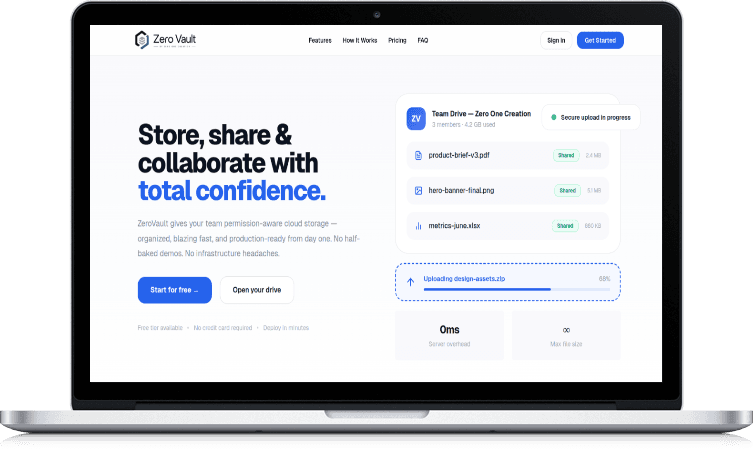
ZeroVault: a React and Next.js team workspace

Workspaces
Permission-based team spaces
Cloud storage
S3-backed file storage
Secure sign-in
Authentication with Better Auth
Next.js
Built on Next.js and MongoDB
See our products
ZeroVault team file storage product on a laptop

Guide

React development: a practical guide for product teams

What is React?

React is an open-source JavaScript library for building user interfaces from reusable components. It is maintained by Meta and is one of the most widely used front-end technologies, which makes React developers relatively easy to find.

React focuses on the interface. For routing, server rendering and data loading, teams add a framework such as Next.js or use React with tools like Vite.

When to choose React for your product

React suits interactive applications: dashboards, portals, editors and tools where users spend time working. Its component model makes complex interfaces manageable and consistent.

For public, search-led websites, React is usually used through Next.js so pages are rendered on the server.

Keeping large React apps maintainable

Large React codebases stay healthy with TypeScript, a shared component library, a clear approach to state and data fetching, and tests for critical flows.

Code reviews and documentation matter as much as the code itself, especially when new developers join.

React performance basics

Most React performance problems come from re-rendering too much, loading too much JavaScript, or rendering very long lists. Profile with real data before optimising.

Virtualise long lists, split code by route, cache server data, and memoise only where profiling shows a benefit.

Hiring React developers: in-house, freelance or a team

In-house hiring gives long-term ownership but takes time. Freelancers suit small, well-defined tasks. A dedicated team from a development company gives you capacity quickly, with design, back-end and DevOps support behind it.

Whichever you choose, make sure code lives in your repository and is documented.

TypeScript and code quality

TypeScript adds types to JavaScript, catching many errors before code runs and making large codebases easier to change. For products that will grow and be worked on by several developers, it is usually worth it.

Code reviews, consistent formatting, linting and automated tests on important flows keep quality steady as the team and codebase grow.

State management and data fetching

Much of the complexity in React apps comes from managing data: what is loaded from the server, what is cached, and what changes as users interact. Choosing clear patterns early, and keeping server data separate from local interface state, avoids tangled code later.

Libraries for data fetching and caching handle loading states, errors and refreshing data, so developers don't rebuild them for every screen.

Design systems and reusable components

A design system is a shared set of components, such as buttons, forms, tables and dialogs, with consistent styles and behaviour. It makes new screens faster to build and keeps the product consistent.

Start small with the components you use most, document them, and grow the system as the product grows.

Taking over an existing React codebase

When we take over a React app, we start with an audit: dependencies and their versions, structure, test coverage, performance and known bugs. That shows what to fix first and what can wait.

Most codebases improve best through steady, incremental refactoring alongside new features, rather than a risky full rewrite.

What affects the cost of React development

Costs depend on scope, number of screens and roles, design system work, integrations, performance and testing needs, migration effort and whether you need a project team or dedicated developers.

We don't publish fixed prices or packages. After a strategy call, we send a written proposal with a customised quotation.

Before you talk to us

Frequently asked questions

What does a React JS development company do?

It designs and builds web applications with React, from dashboards and portals to full products, and often provides React developers who work with your team.

React or Next.js: which should we use?

Plain React suits apps behind a login. Next.js suits public, search-led sites and full-stack products. Many products use both: Next.js for public pages and React for the app.

Can you migrate our app to React?

Yes. We migrate from jQuery, AngularJS or older React code incrementally, screen by screen, while feature work continues.

Can you speed up our React app?

Yes. We profile real screens, fix re-renders, reduce bundle size, virtualise lists and improve data fetching.

Do you use TypeScript?

Yes, on every new project, and we can introduce it gradually into existing codebases.

Can we hire dedicated React developers?

Yes. Our React developers can join your team, work in your tools and follow your process.

Can you build a design system for our product?

Yes. We build documented, accessible component libraries with design tokens that your whole team can use.

Do we own the code?

Yes. The code lives in your repository and belongs to your company.

Do you write automated tests?

Yes. We add tests for important flows and components, with the level of coverage agreed in the proposal.

Can you take over a React app another team built?

Yes. We start with an audit, then stabilise and improve it step by step.

Can you upgrade an old React app?

Yes. We plan upgrades of React and its dependencies in steps, testing as we go.

How much does React development cost in India?

It depends on scope, screens, integrations, testing and the engagement model. We do not publish fixed prices; share your requirements and we will send a customised quotation.

Contact us

Tell us about your React project or team.

Share a few details. An engineer reviews every enquiry and gets back to you to set up a call.

We use your details only to reply to this enquiry. See our privacy policy.