Aisha Sharma
Educational institutions do not manage one customer journey. They manage a relationship that can last for decades.
A prospective student may first appear as an enquiry, become an applicant, enroll in a program, register for courses, pay fees, receive advising, graduate, return for another credential, join an alumni network and eventually become a donor or mentor.
The operational challenge is that these stages are often managed in separate systems.
Admissions may use a CRM. Academic records may sit in a student information system. Finance may run through an ERP. Faculty use a learning management system. Student support may rely on spreadsheets or ticketing tools. Alumni relations may maintain another database entirely.
When those systems do not share reliable data, the institution feels the consequences everywhere: duplicate records, repeated data entry, delayed decisions, poor reporting, inconsistent communication and students being asked for information the institution should already know.
That is why modern education ERP projects increasingly focus on the entire student lifecycle rather than accounting and administration alone.
EDUCAUSE identified both the "Data-Empowered Institution" and "Administrative Simplification" among the highest-priority technology issues for higher education in its 2025 Top 10. It also described institutions as moving through a major new generation of ERP and administrative-system modernization, with an emphasis on simplifying processes, connecting data and improving the student journey. EDUCAUSE Review
A well-designed education ERP ecosystem can support that objective, but only if the institution first understands what should be centralized, what should remain specialized and how information should move between systems.
What does ERP mean in an educational institution?
Traditional enterprise resource planning software is designed to coordinate core organizational functions such as finance, procurement, HR, payroll and budgeting.
Education adds a second operational backbone: the student information system, or SIS.
The SIS manages academic and student-specific records such as applications, programs, enrollment, course registration, grades, credentials and student accounts. Oracle's Student Management documentation, for example, covers person information, admissions applications, curricula, programs, enrollment, credentials, course sections, grades, fees and student accounts. Oracle Docs
In practice, many institutions therefore use the term "education ERP" more broadly than a conventional corporate ERP.
The architecture may combine:
- student information management
- recruitment and admissions
- finance and student billing
- HR and payroll
- academic administration
- advising and student services
- reporting and analytics
- advancement and alumni relations
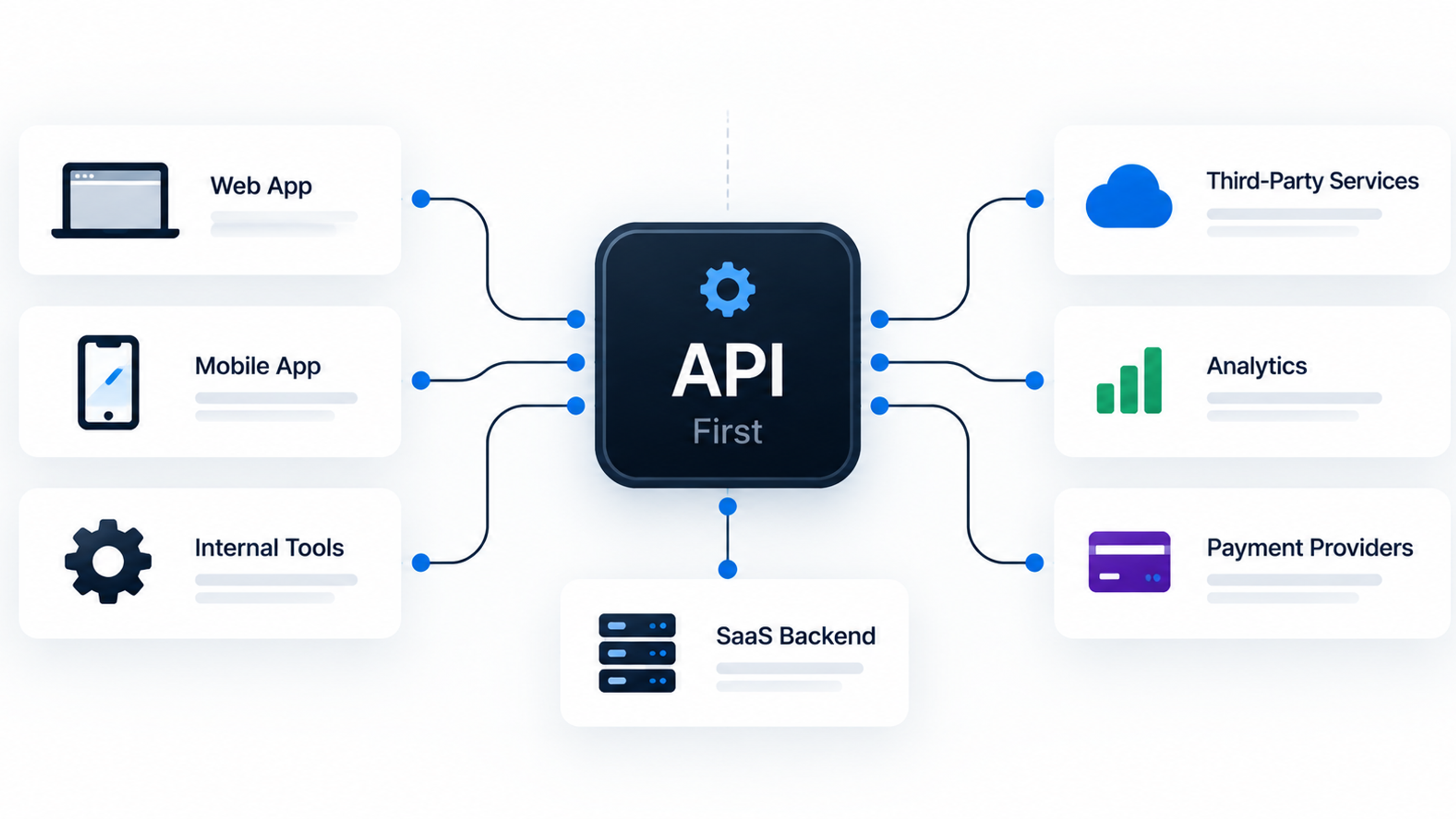
Some vendors deliver these functions within one platform. Others provide tightly integrated modules or connect specialized products through APIs.
The important goal is not forcing every process into one application. It is creating a dependable institutional data and workflow backbone.
ERP, SIS, CRM and LMS are not the same thing
Confusing these systems is one of the easiest ways to design the wrong architecture.
An ERP primarily coordinates institutional operations such as finance, procurement, workforce administration and related enterprise processes.
An SIS is typically the authoritative system for academic and student records.
A CRM manages relationships and engagement. In education, that can include prospective students, applicants, current learners, alumni, donors and other constituents.
A learning management system, or LMS, supports teaching and learning activities such as course content, assignments, assessments and classroom interaction.
There is overlap.
A modern education platform may include CRM-style recruitment, SIS functionality, finance and alumni engagement under a shared architecture. Salesforce Education Cloud, for instance, currently provides modules spanning recruitment and admissions, academic operations, student success, student financials and advancement and alumni relations. Salesforce Ellucian similarly describes its current student platform as supporting the learner journey from admissions through graduation and lifelong learning. Ellucian
The architectural question is therefore not "Which acronym wins?"
It is "Which system owns each record and process, and how do the systems stay synchronized?"
The student lifecycle should determine the architecture
A useful education ERP should follow the institution's operating reality.
The lifecycle starts before enrollment.
It continues long after graduation.
That means the data model should not treat an individual as a completely different person every time their relationship with the institution changes.
A prospect can become an applicant.
An applicant becomes a student.
A student may become an employee or research assistant.
A graduate becomes an alumnus.
An alumnus may return as a postgraduate learner, donor, mentor or employer contact.
A connected architecture preserves that history while controlling which departments can access which information.
This is one of the strongest arguments for lifecycle-based ERP planning.
Stage 1: Recruitment and admissions
Admissions is where the institutional record often begins.
A prospective student might arrive through:
a website form, recruitment event, school outreach program, education agent, digital advertisement, referral, enquiry email or direct application.
The admissions system should capture the source and connect subsequent activity to the same person where possible.
Modern admissions platforms can support prospect management, configurable applications, document collection, application evaluation, communications and onboarding. Workday Student Admissions, for example, supports prospect and applicant management, online applications, event management, financial-aid action items, transfer-credit evaluation and digital onboarding. Workday
Oracle Student Admissions similarly supports application forms, submitted applications, program structures and admissions decision workflows. Oracle Docs
The important workflow is not simply "receive application."
A practical admissions process might look like:
Enquiry → Prospect → Application started → Application submitted → Documents verified → Evaluation → Decision → Offer accepted → Enrollment onboarding
Each transition should have a clear owner and a defined system action.
Automation is useful around the administrative work
Admissions teams can automate predictable tasks such as:
application acknowledgements, missing-document reminders, reviewer assignments, status notifications, offer workflows and onboarding tasks.
But automation should not make opaque academic or eligibility decisions without appropriate institutional oversight.
The goal is to reduce administrative friction while keeping consequential decisions accountable.
Fraud is also becoming part of the admissions technology discussion. Ellucian's 2026 Apply release, for example, includes application data validation and fraud-detection capabilities as part of its admissions workflow. Ellucian
Stage 2: Converting an admitted applicant into an active student
This transition is more technically important than it looks.
When an applicant accepts an offer, their information should not be manually recreated in several systems.
The relevant data should move into the institutional student record according to defined rules.
That may include:
identity information, program, campus, intake, residency information, prior education, financial-aid status, contact information and other enrollment data.
The student may then need:
an institutional ID, email account, portal access, course-registration eligibility, billing account, accommodation access, library access and orientation tasks.
This is where disconnected systems create immediate frustration.
A student who already supplied an address during application should not need to re-enter it simply because another department uses a separate database.
A connected ERP architecture reduces that duplication.
Stage 3: Course registration and academic administration
Once enrolled, the SIS becomes central to daily academic operations.
It needs to understand:
program requirements, course catalogues, prerequisites, sections, instructors, capacity, registration periods, withdrawals, grades and progression.
Good integration becomes especially important here.
The LMS may need course and enrollment data from the SIS.
The finance system may need registration information to calculate charges.
Advising tools need academic progress.
Identity systems need to know whether a student is active.
Reporting teams need consistent definitions.
The system should make these relationships explicit rather than relying on batch spreadsheets passed between departments.
Stage 4: Fees, payments and student finance
Student financial processes are tightly connected to enrollment but should still be governed carefully.
The system may need to manage:
tuition calculations, fees, discounts, scholarships, financial aid, invoices, payment plans, refunds, outstanding balances and financial holds.
The value of integration is particularly clear when academic events affect finance.
A course withdrawal may change a student's balance.
A financial hold may affect registration.
A scholarship adjustment may change what the student owes.
If these workflows happen across disconnected databases, staff end up reconciling records manually.
A well-designed system uses documented events and integration rules so each system receives the information it genuinely needs.
That does not necessarily mean sharing every piece of financial data across the institution.
Integration should follow the principle of minimum necessary access.
Stage 5: Advising and student success
An ERP or SIS becomes much more valuable when it helps staff act on student information rather than merely storing it.
An adviser may need a consolidated view containing:
academic progress, current registration, previous advising interactions, outstanding requirements, relevant holds and support referrals.
The purpose is not surveillance.
It is to reduce the amount of institutional knowledge that depends on individual staff members remembering what happened.
Student persistence provides a strong reason to take this seriously. The National Student Clearinghouse Research Center reported that 85.8% of nearly 2.62 million students who entered U.S. colleges in fall 2024 were still enrolled in spring 2025, while 77.1% remained enrolled by fall 2025. NSC Research Center
Not every departure can or should be predicted through software. But institutions do benefit from understanding where students encounter administrative, financial or academic barriers.
Early alerts need human interpretation
Institutions may use indicators such as:
missed registration, repeated failed requirements, unresolved financial issues, advising inactivity or other institution-defined signals.
Those signals should create opportunities for appropriate intervention.
They should not automatically label a student as "at risk" in ways that become self-reinforcing or difficult to challenge.
Analytics should support professional judgment.
Stage 6: Graduation and credential management
Graduation is not merely the point where the student disappears from the system.
The institution needs to verify academic completion and preserve a reliable record.
That can include:
degree audits, outstanding requirements, final grades, credential issuance, transcripts and graduation eligibility.
The graduate's relationship then changes.
Some data becomes part of the permanent academic record.
Other operational permissions should end.
Access may move from student services to alumni services.
This handoff deserves the same architectural attention as admission-to-enrollment.
Stage 7: Alumni and advancement
The lifecycle continues after graduation.
An alumni system may support:
communications, events, mentoring, career networks, volunteering, donations, fundraising campaigns and institutional relationships.
Salesforce's current Education Cloud positioning explicitly connects recruitment, academic operations, student success and advancement/alumni relations within one education data foundation. Its advancement functionality includes alumni engagement, fundraising operations and mentoring workflows. Salesforce
This continuity can be valuable because alumni engagement is stronger when the institution understands the relationship history.
However, the alumni team should not automatically inherit unrestricted access to everything collected during the student's academic years.
Lifecycle continuity and unlimited data access are not the same thing.
Good ERP architecture preserves history while enforcing purpose-based permissions.
One person, one identity does not mean one giant record visible to everyone
The phrase "single source of truth" is often misunderstood.
It does not mean every department should have unrestricted access to one enormous profile.
It means the institution should know which system is authoritative for each type of data and how those records relate to the same person.
For example:
The SIS may own the official academic record.
The ERP finance module may own institutional accounting transactions.
The CRM may own recruitment communications.
The LMS may own learning activity.
The alumni platform may own advancement engagement.
Integration provides consistency without unnecessarily collapsing every dataset into one unrestricted database.
This distinction is essential for privacy and security.
Student privacy must be designed into the system
Educational records contain highly sensitive information.
In the United States, FERPA protects the privacy of student education records at institutions that receive funding under applicable U.S. Department of Education programs. Student Privacy
The Department also makes clear that institutions may use third-party providers for certain institutional functions involving education records when specific conditions are satisfied, including institutional control over the use and maintenance of those records and restrictions on unauthorized use and redisclosure. Student Privacy
For ERP planning, that means privacy cannot be treated as a legal checklist added after vendor selection.
It affects architecture.
Institutions need to consider:
role-based access, data minimization, audit logging, vendor contracts, retention, deletion, disclosure tracking, encryption, authentication and incident response.
Different jurisdictions introduce additional privacy and data-protection requirements, so institutions operating internationally need local legal review rather than assuming one policy applies everywhere.
Permissions should follow roles and purposes
Admissions staff need admissions information.
Faculty need information relevant to teaching.
Finance staff need financial records.
Advisers need information necessary to support students.
Alumni teams need appropriate post-graduation engagement information.
Very few people need access to everything.
This should be enforced by the system, not left to informal practice.
Data integration is usually harder than feature configuration
Many ERP projects appear to be software-selection projects but are actually data projects.
EDUCAUSE's 2025 data-modernization research describes legacy systems as creating fragmented and siloed environments that make unified institutional reporting difficult. It also highlights inconsistent data quality, security concerns and governance as barriers to better use of analytics. EDUCAUSE Review
Replacing the interface does not automatically fix those problems.
Before migration, an institution may discover:
three different definitions of "active student," duplicate person records, inconsistent department codes, outdated addresses, incomplete historical data and spreadsheets containing information not present in any official system.
The difficult work is deciding what the new data model should mean.
Establish system ownership before integration
For each important data domain, define an authoritative owner.
Examples might include:
Identity: central identity or SIS
Academic record: SIS
Courses and programs: SIS or curriculum-management system
General ledger: finance ERP
Payroll: HCM/ERP
Learning activity: LMS
Recruitment interaction: CRM
Alumni engagement: advancement CRM
The exact design varies.
The important part is avoiding two systems independently editing the same authoritative field without a conflict rule.
APIs are usually preferable to manual synchronization
Modern education technology ecosystems need reliable integration.
Where vendor-supported APIs are available, they usually provide a cleaner long-term foundation than manually exported spreadsheets or direct database manipulation.
That matters because the institution's application landscape will continue changing.
A well-designed integration layer can connect the ERP/SIS to:
identity management, LMS, payment gateways, communication platforms, library systems, accommodation tools, government reporting, analytics and other services.
However, APIs do not solve process ambiguity.
If the institution cannot agree what a status means, the API will simply transmit the ambiguity faster.
Reporting should begin with shared definitions
One promised benefit of a modern ERP is better analytics.
That benefit appears only when the institution agrees on definitions.
What counts as an applicant?
When is a student considered enrolled?
What is a withdrawal?
Which term should revenue belong to?
How is retention calculated?
What makes an alumnus active?
If different departments calculate the same metric differently, a new dashboard will not create trust.
The implementation should therefore establish a data dictionary and governance process.
This can sound administrative, but it directly affects institutional decision-making.
Cloud ERP is increasingly common, but migration still requires discipline
Higher education vendors have moved strongly toward SaaS delivery.
Ellucian reported 30 institutional SaaS SIS/ERP go-lives in 2024 and 32 more in 2025. EDUCAUSE
Those numbers are vendor-specific and should not be interpreted as a universal measure of the entire market. They do, however, illustrate the broader direction toward cloud-based institutional platforms.
Cloud ERP can reduce some infrastructure responsibilities and make platform updates more predictable.
It does not remove implementation complexity.
Institutions still need to address:
data migration, integrations, identity, configuration, process redesign, reporting, testing, training and organizational change.
In some cases, moving a bad process unchanged into SaaS simply creates a newer bad process.
Do not automate before simplifying the process
ERP projects create an opportunity to question procedures that accumulated over years.
Suppose an application currently passes through seven approvals.
The implementation team should not immediately configure seven digital approvals.
It should first ask why seven approvals exist.
Maybe four are historical.
Maybe two review the same information.
Maybe one exists only because the old system could not enforce a rule automatically.
EDUCAUSE's emphasis on administrative simplification makes exactly this distinction: modernizing technology is valuable when institutions also redesign the processes around it. EDUCAUSE Review
Digitizing unnecessary bureaucracy is not transformation.
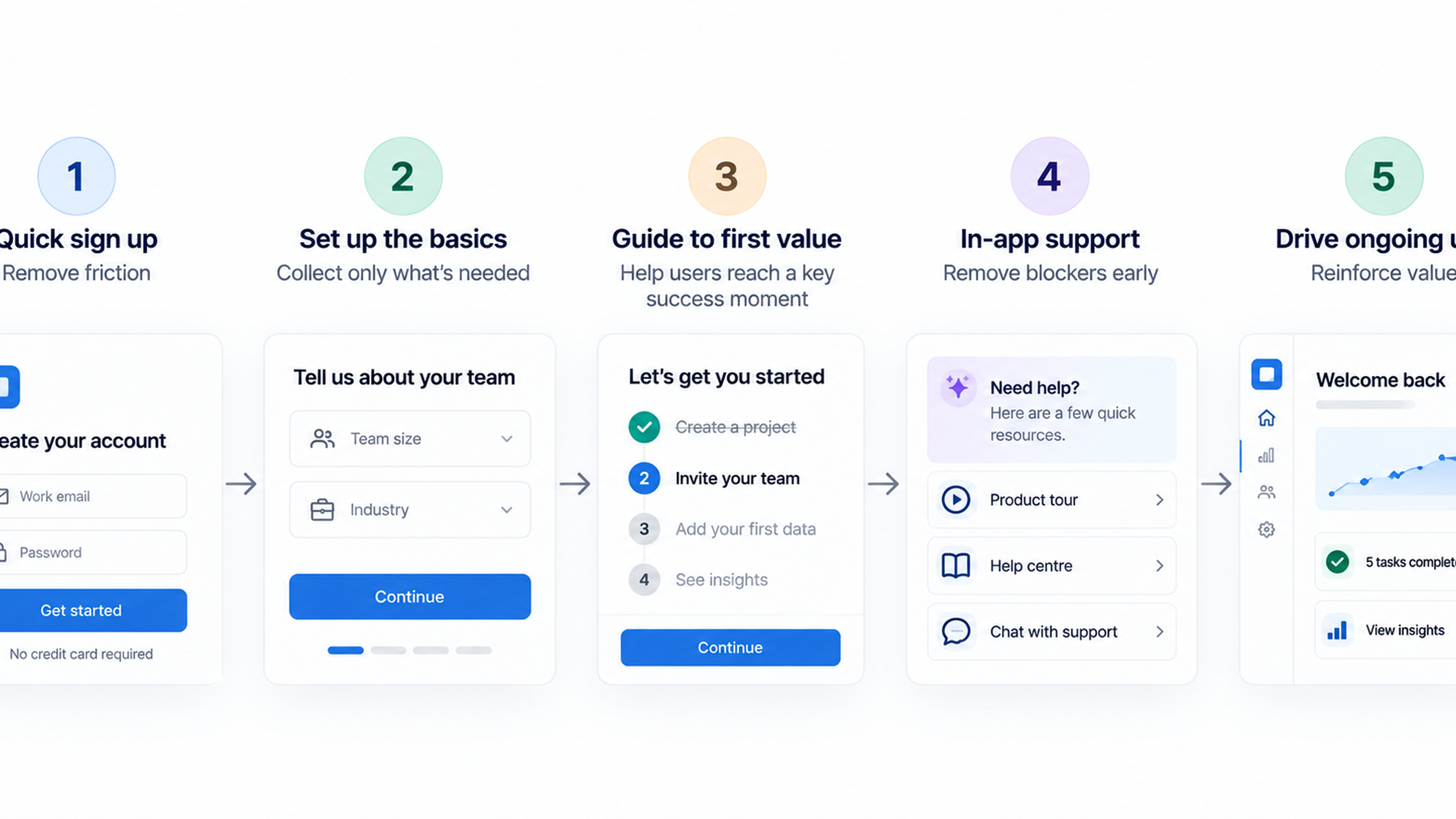
Self-service should reduce friction, not transfer work
Modern ERPs often emphasize self-service.
Students can update information, register, check balances, retrieve documents or complete requests without visiting an office.
Faculty and staff can perform routine activities through role-based portals.
That can improve convenience and reduce administrative workload.
But self-service can also become badly designed outsourcing of administrative complexity to the student.
A student portal should not require someone to understand internal organizational structures to complete a simple task.
The best self-service workflows hide complexity.
They explain status clearly, show what is required next and provide a route to human help.
Implementation should be phased around complete journeys
Trying to replace every administrative system simultaneously increases risk.
A phased implementation can be more manageable, but phases should be designed around usable end-to-end workflows rather than arbitrary modules.
For example, a first phase might focus on:
Prospect → Application → Admission → Enrollment
The institution can then stabilize that journey before expanding deeper into academic planning, finance or alumni operations.
Another institution may have a strong SIS but weak finance infrastructure, so its priority will be different.
There is no universal module order.
The correct sequence depends on institutional pain, technical dependencies and risk.
A practical education ERP implementation framework
A responsible implementation can be organized into six stages.
1.Map the current lifecycle
Document what happens from first enquiry through alumni engagement.
Do not map only the official policy.
Map what staff actually do.
This reveals spreadsheets, manual workarounds, duplicate approvals and unofficial databases.
2.Identify authoritative records
Decide which system should own each important data domain.
Do this before designing integrations.
3.Simplify processes
Remove unnecessary steps before configuration.
Standardize where standardization makes sense.
Preserve genuine institutional differences where they create value or are required.
4.Design integrations and permissions
Document what data moves, in which direction, under what trigger and who can access it.
Include failure handling.
An integration is not complete simply because it works during the happy path.
5.Migrate and test data
Clean records before migration.
Test reconciliation.
Validate edge cases.
Run realistic end-to-end scenarios covering admissions, enrollment, finance and academic processes.
6.Train by role and measure adoption
Registrar staff, advisers, faculty, finance teams and admissions officers do different work.
Their training should reflect their workflows.
After launch, monitor support demand, process completion, data quality and usage.
How to decide between an off-the-shelf ERP and custom development
Most institutions should not build a complete ERP from scratch.
Student records, finance, payroll, course registration and regulatory reporting contain years of complicated domain logic. Mature platforms already solve many of these problems.
Custom development becomes more reasonable at the edges.
An institution may have a distinctive:
application workflow, research process, internship model, placement system, continuing-education program, accreditation process or industry-partner workflow.
If a standard ERP cannot support that requirement cleanly, custom ERP-adjacent software can fill the gap while leaving the core system of record intact.
The architecture might be:
Core SIS/ERP → supported API → custom workflow application → results written back to the appropriate system
This is generally safer than heavily modifying the ERP's internal database.
The question should be:
"Is the requirement genuinely institution-specific?"
Not:
"Can we build this ourselves?"
Technical capability alone is not a business case.
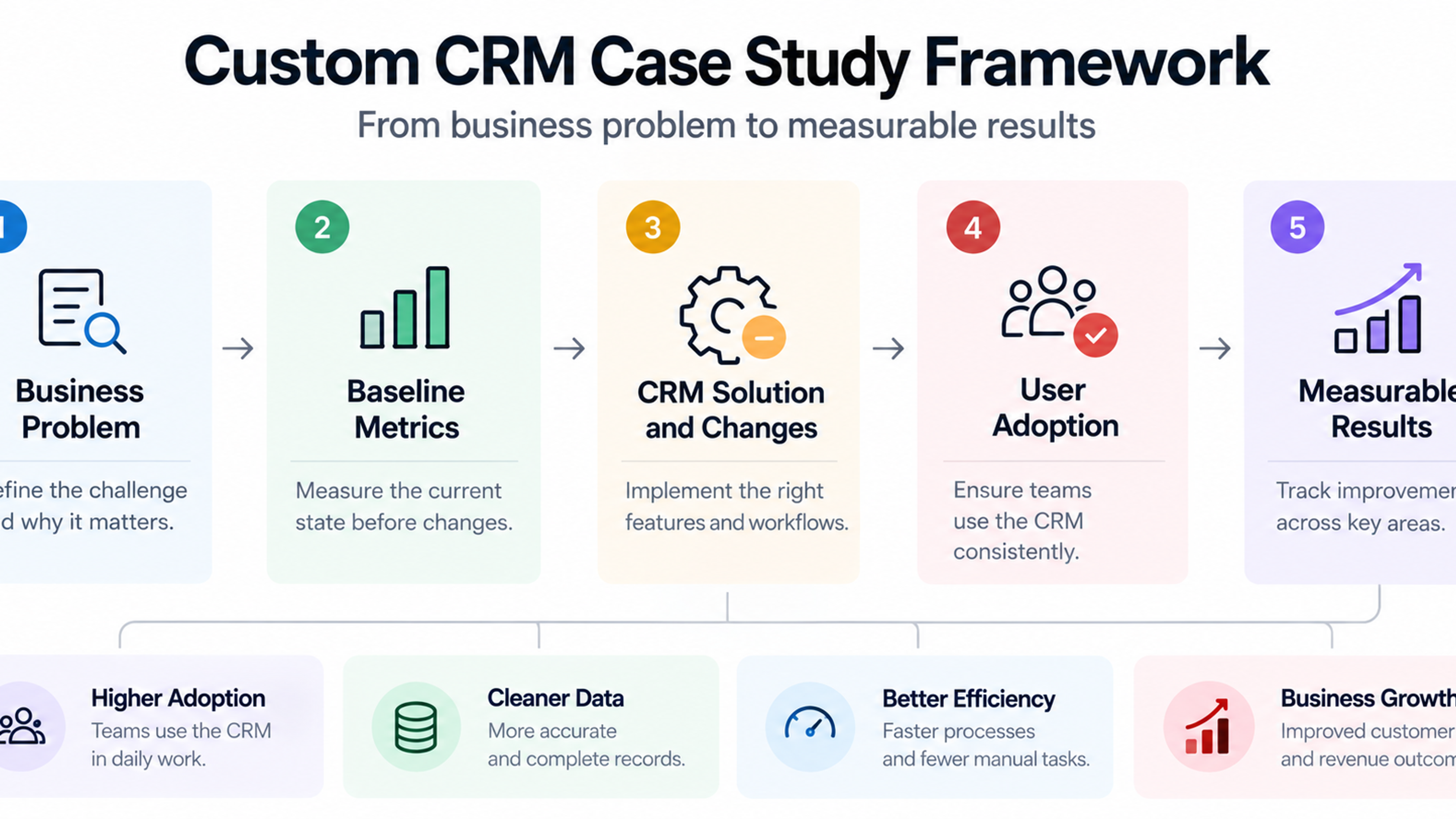
What to measure after implementation
ERP success should not be measured primarily by whether the software went live on schedule.
Go-live is a project milestone.
It is not an institutional outcome.
Useful measures depend on the problems the implementation was meant to solve.
For admissions, consider:
application completion, processing time, missing-document workload and time from completed application to decision.
For student administration:
registration errors, request turnaround, self-service completion and manual intervention.
For finance:
reconciliation effort, billing accuracy, payment-processing time and reporting speed.
For data:
duplicate records, incomplete required fields, reconciliation failures and time required to prepare institutional reports.
For employees:
administrative time, support tickets and adoption of intended workflows.
For students:
task completion, service response time and friction in major lifecycle transitions.
A vendor-commissioned Forrester study published through EDUCAUSE in 2025 reported a modeled 133% three-year ROI for a composite institution using Ellucian Colleague SaaS, based on interviews with eight customers. That figure should be understood in its context as a commissioned composite study, not as a guaranteed ERP return. EDUCAUSE
Every institution needs its own baseline and outcome measures.
Common education ERP mistakes
Buying features instead of fixing workflows
A long feature checklist does not guarantee a better student journey.
Understand where work breaks down first.
Treating every department as an independent buyer
Local optimization creates institution-wide fragmentation.
Departments need input, but shared architecture requires governance.
Migrating bad data unchanged
A modern database full of duplicates and contradictory codes is still bad data.
Clean and reconcile before migration.
Over-customizing the core platform
Heavy customization can make upgrades expensive and difficult.
Prefer configuration first, integrations second and deep customization only when necessary.
Neglecting alumni at the architecture stage
If the data model ends at graduation, the institution may later need another expensive reconciliation project to build a meaningful alumni view.
Ignoring change management
A technically successful ERP can still fail operationally if staff keep running the old process through spreadsheets.
Giving too much access because it is convenient
Connected data requires stronger permission design, not weaker permission design.
The goal is not one system. It is one coherent institution
There is a temptation to describe education ERP as an attempt to put every department into a single software package.
That is not the most useful goal.
Universities, colleges, schools and training organizations will continue to use specialized systems.
Teaching platforms have different requirements from financial systems.
Admissions has different workflows from alumni relations.
Research may need specialist applications.
The real objective is coherence.
A student should not experience the institution as a collection of disconnected databases.
Staff should not spend hours reconciling information that systems already contain.
Leadership should not receive five different answers to the same basic institutional question.
And alumni should not become strangers to the institution simply because their academic status changed.
A modern education ERP strategy creates a controlled information backbone across those relationships.
The strongest implementations therefore start with the student lifecycle, define clear systems of record, simplify administrative processes, connect specialist tools through supported integrations and apply privacy controls throughout.
The result is not merely an upgraded ERP.
It is an institution that can understand and support the same person from first enquiry through enrollment, learning, graduation and the relationship that follows.
Frequently Asked Questions
An education ERP coordinates institutional processes such as finance, HR, student administration and related workflows. In higher education, it commonly works alongside or includes a student information system that manages admissions, enrollment, courses, grades and academic records.
An ERP traditionally manages enterprise operations such as finance, HR and procurement. An SIS focuses on student and academic records. Modern higher education platforms often integrate both closely or deliver them through one broader ecosystem.
Yes. Many education platforms include admissions functionality or integrate with an admissions CRM. Typical capabilities include prospect management, applications, document tracking, evaluation, decisions and onboarding.
Yes, either directly or through an integrated advancement CRM. The important architectural requirement is preserving the constituent relationship after graduation while applying appropriate permissions to historical student data.
There is no reliable universal duration. Timing depends on institution size, scope, legacy systems, integrations, data quality, customization and rollout strategy. A finance-only modernization is very different from replacing admissions, SIS, HR and finance simultaneously.
Usually not from scratch. Core higher education processes are complex and well served by established platforms. Custom software is more often appropriate for distinctive workflows that can integrate with the core ERP or SIS through supported APIs.
A common risk is treating implementation as a software installation rather than a combination of process redesign, data governance, integration, security and organizational change. A technically functioning platform will not fix undefined processes or inconsistent data on its own.
The LMS usually remains a specialized teaching and learning platform. It should integrate with the SIS or ERP so courses, enrollments, identities and relevant academic information stay synchronized.