Gourav Dhiman
How Real Estate Businesses Are Using AI for Lead Qualification
A buyer fills out a form on a listing at 9 p.m. on a Tuesday. Three other agents get the same lead. Whoever calls back first usually wins the client, and most agents don't call back for hours. That gap, not a lack of leads, is the actual problem AI lead qualification is built to solve.
Real estate has always generated more leads than agents can properly work. Portal inquiries, open house sign-ins, Facebook ad clicks and referral forms all pile into a CRM, and someone has to figure out which ones are worth a phone call today versus which ones are browsing six months out. That sorting work used to fall entirely on agents or a junior team member, done inconsistently and usually too slowly. AI has taken over a meaningful part of it, and the way it's being used now looks different from the chatbot widgets of a few years ago.
This piece looks at what's actually happening inside brokerages and agent teams: how AI screens and scores leads, what a real qualification conversation looks like, which tools are doing this work, and where the approach still needs a human to close the gap.
Why speed became the whole conversation
Response time dominates every discussion of real estate lead conversion, and the numbers explain why. Research from MIT and InsideSales.com found that a business's odds of qualifying a lead drop by roughly a factor of ten once an hour has passed without contact. A Harvard Business Review audit of 2,241 companies found that firms responding to a new lead within an hour were seven times more likely to qualify it than those that waited even slightly longer.
Real estate performs badly against that benchmark. Inman's Real Estate Technology Survey put the median agent response time to a new web inquiry at 917 minutes, more than fifteen hours. Meanwhile, industry surveys commonly cite that most buyers end up working with whichever agent responds first, regardless of that agent's experience or the quality of their pitch. When the difference between winning and losing a lead is measured in minutes rather than in negotiation skill, an agent's calendar becomes the real bottleneck. That's the gap AI qualification tools are built to close, since software doesn't sleep, drive between showings, or take a lunch break.
It's worth treating the more dramatic multiplier statistics circulating online, claims of 21 times or 391 percent higher conversion from fast response, with some caution. Most trace back to older studies by specific vendors such as Velocify, and the exact figure varies by source and hasn't been independently re-verified at that scale recently. The direction of the finding is well established across many sources. The exact multiplier is less certain, and vendors selling speed-focused tools have an obvious incentive to cite the largest number available.
What AI lead qualification actually does
At its simplest, AI qualification means software engages a new lead automatically, usually within seconds, and has a conversation designed to establish a handful of things before a human agent gets involved: whether the person is a genuine buyer or seller rather than a casual browser, roughly what they can afford and whether financing is already sorted, how urgent their timeline is, and what area or property type they actually want.
This runs through a few channels depending on the tool. Text-based systems hold an SMS conversation that reads like a helpful human assistant, asking about budget and timeline in plain language rather than a rigid form. Voice-based tools go further, placing an automated call within moments of a lead coming in and having a natural spoken conversation, sometimes transferring the call live to an agent the moment the lead shows real intent. Web chat widgets do similar work on the site itself, engaging a visitor before they leave the page.
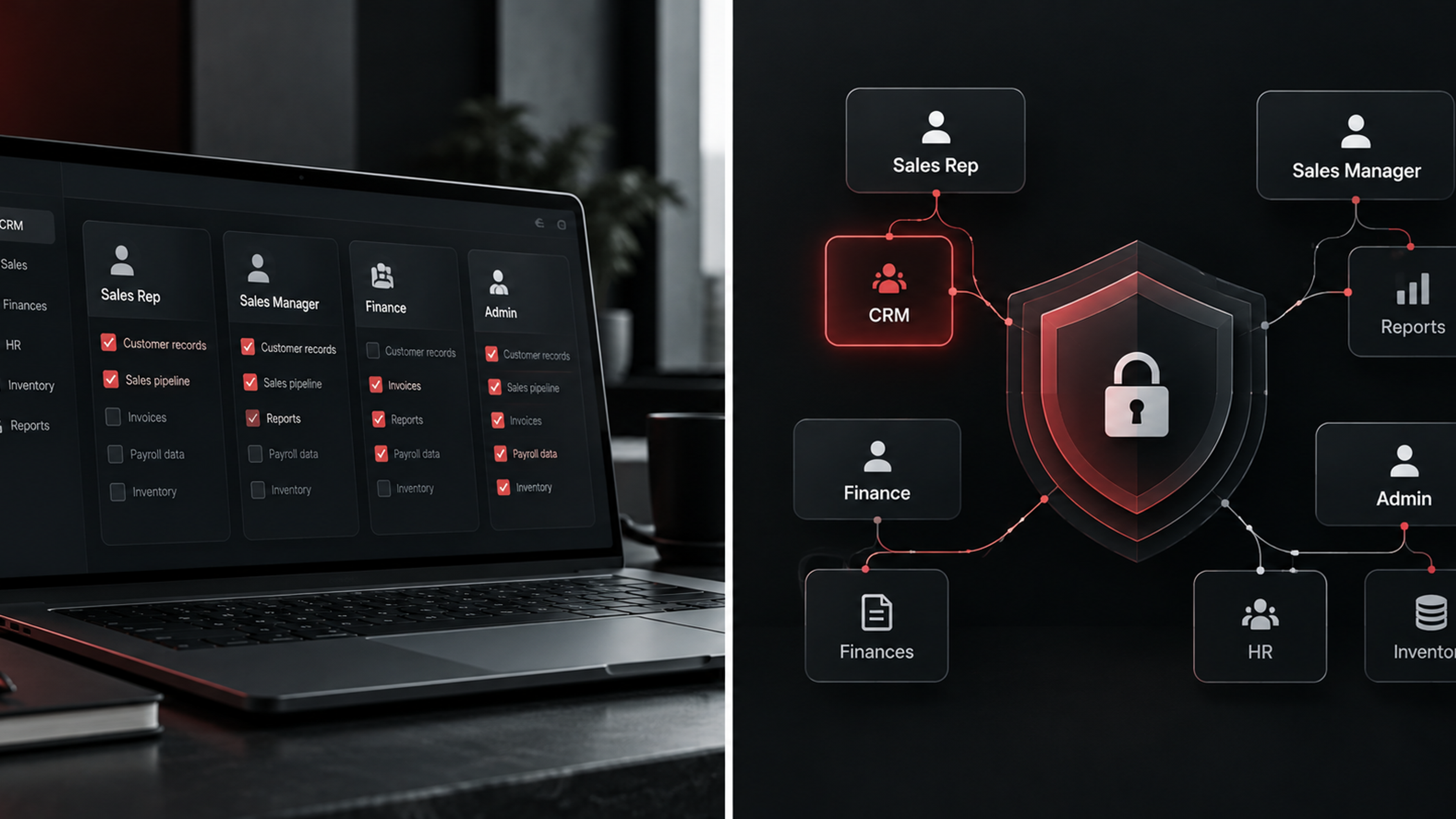
The output of all this is a scored, tagged lead sitting in the CRM by the time an agent sees it, usually labeled something like hot, warm or nurture, along with a summary of what the person actually said about their budget, timeline and motivation. Instead of an agent opening a lead list and guessing which name to call first, they open a list that's already been sorted for them.
The six things a good qualification conversation tries to establish
Regardless of which platform runs the conversation, most real estate qualification frameworks converge on a similar set of questions, because these are the details that actually predict whether a lead is close to transacting.
Price range and financial readiness come first, since a buyer who hasn't spoken to a lender yet is in a very different stage than one who's pre-approved and shopping with a number in hand. Timeline urgency matters just as much: someone who needs to move in six weeks behaves nothing like someone testing the market a year out, and treating them identically wastes the urgent lead's patience and the agent's time on the other. Geographic territory and property type narrow the lead to the right agent or specialist rather than a generic queue. Motivation is the qualitative piece that's hardest to capture on a form but often the most revealing, whether someone is relocating for a job, downsizing, or just browsing because a friend mentioned it.
A text-based bot or a voice AI agent can ask about all of these in a conversational way that a static web form can't replicate, and because the exchange feels like a real conversation rather than an interrogation, prospects tend to give fuller answers than they would to a dropdown menu.
Where this shows up across a brokerage
Portal and ad leads are the most obvious use case, since these arrive at high volume and with almost no context, often just a name, number and the listing that triggered the inquiry. An AI agent messages the lead within moments of the form submission, before the prospect has moved on to look at five other listings from five other agents.
Website chat does similar work for people actively browsing a brokerage's own site, engaging a visitor who's looking at a specific listing before they bounce, and capturing enough detail that a follow-up call doesn't start from zero.
Database reactivation is a less visible but increasingly common use. Every brokerage has hundreds or thousands of old leads sitting dormant in a CRM, people who inquired eighteen months ago and never became clients. Rather than agents manually working through that list, which almost never happens because it's tedious and unrewarding, an AI system can periodically reach back out, checking whether circumstances have changed and re-qualifying anyone whose situation has shifted toward being ready to buy or sell.
After-hours and overflow coverage rounds this out. A lead that comes in at 11 p.m. still gets an immediate response, and during a busy week when an agent's phone would otherwise go to voicemail, the AI layer keeps the conversation moving until someone is free to take over.
The tools currently doing this work
The category has settled into a small group of platforms built specifically for real estate rather than generic customer service bots repurposed for property leads. Structurely runs an AI assistant that engages leads over SMS, email and voice, and is built around long nurture cycles, continuing to follow up for months rather than giving up after a few attempts. Ylopo pairs its own paid lead generation with an AI text and voice assistant that reactivates a brokerage's existing database, which suits teams that already run a high volume of Ylopo-sourced leads. Voice-first platforms such as Retell AI and others in that space focus on placing an automated call within a second or two of a lead arriving and transferring it live to an agent the moment the prospect signals real intent, which matters most for high-volume portal leads where phone conversations convert at a meaningfully higher rate than text.
Pricing across this category runs from roughly a few hundred dollars a month for a focused SMS qualification tool up to four figures for a full platform bundling paid ads, nurture and voice AI together. The right choice depends less on which tool has the most features and more on where a specific team's leads actually come from and how long their sales cycle tends to run.
[Internal link opportunity: a comparison piece on CRM platforms for real estate, since most of these AI tools are chosen based on which CRM a brokerage already runs.]
What this actually changes for conversion, and what to be skeptical of
Some tool vendors report meaningful gains from adopting AI qualification, more qualified leads reaching agents and higher rates of inquiries converting to actual showings. Those figures are useful as a directional signal that the approach works, but they come from the companies selling the software, measured against their own customers rather than through independent, controlled comparison. A cautious reader should treat vendor-reported percentages the way they'd treat any sales material: plausible, consistent with the broader case for faster response times, but not something to plug into a business case without your own testing.
The more durable, better-sourced pattern is the underlying one: speed to first contact and consistent qualification meaningfully improve conversion, and the industry's baseline response time is bad enough that almost any systematic improvement helps. Whether a specific tool delivers a 20 percent lift or a 40 percent lift for your particular lead mix is something you'll only really know after running it against your own numbers for a quarter.
Where AI qualification still needs a human
None of this replaces an agent's judgment, and the tools that work best treat AI as a triage layer rather than a closer. A bot can establish that someone has a $600,000 budget and wants to move in ninety days. It's much weaker at reading the hesitation in someone's voice, negotiating on price, or handling the emotionally complicated conversations that come up around a divorce sale or an estate transaction. Handing those moments to a script, even a well-written conversational one, tends to frustrate people rather than reassure them.
There's also a real risk in over-automating the handoff. If a lead gets qualified as hot but then sits for another two hours before a human actually calls, the tool has simply moved the delay one step down the pipeline rather than removed it. The AI layer only works if agents actually act on what it surfaces, which means the routing and notification setup matters as much as the qualification conversation itself.
Data quality is the other quiet risk. An AI tool that's misconfigured, asking the wrong questions for a particular market, or trained on generic sales conversation patterns rather than real estate specifics, can produce confidently wrong lead scores that are worse than no scoring at all, because agents start trusting a system that's steering them toward the wrong leads. Reviewing a sample of qualification conversations regularly, rather than assuming the tool is working correctly forever, is worth the time it takes.
A sensible way to start
Teams that adopt this well usually start narrow. Pick the single lead source generating the most volume with the worst response time today, portal leads are the common starting point, and route only those through an AI qualification tool for a month. Compare the actual outcome, calls made, appointments booked, against what was happening before, using your own numbers rather than a vendor's case study. If it clearly helps, expand it to website chat or database reactivation next. If a particular lead source responds badly to automated qualification, perhaps referral leads who expect a personal touch from the start, leave that channel for direct human contact.
The goal isn't to automate every conversation. It's to make sure no lead sits untouched for fifteen hours simply because a human hadn't gotten to it yet, and to give agents a sorted list instead of a random one when they finally do.
Frequently Asked Questions
Most teams can see a change in response time and lead engagement within the first few weeks, since that's largely a function of the tool simply working as configured. Conversion impact takes longer to assess reliably, generally a full sales cycle for that market, since real estate transactions can take months to close from initial inquiry.
No. These tools generally sit on top of an existing CRM rather than replacing it, feeding qualified, scored leads into whatever system an agent or brokerage already uses to track pipeline and follow-up.
A good system doesn't discard them. It typically adds them to a longer nurture sequence, checking back periodically over months, which is where database reactivation tools do their most consistent work, since most "not ready" leads eventually do become ready and simply need to be remembered.
It works at smaller scale too, since even a solo agent misses calls while showing property or negotiating a deal. The economics differ though. A large team can justify a premium platform bundling voice, text and paid lead generation, while a solo agent might get most of the benefit from a lower-cost text-based tool covering after-hours response alone.
Often not immediately, since modern conversational AI reads naturally in text and increasingly in voice. Most platforms disclose the automation somewhere in the conversation or upon request, and this is worth checking against your local advertising and consumer protection rules, since expectations around AI disclosure are shifting and vary by jurisdiction.