Aisha Sharma
A growing share of the people who might become your customers never see your website at all.
They ask a question, get an answer spoken back or summarized on a screen, and move on, having never clicked a single link. That shift, away from search results you compete for and toward answers you either get cited in or don't, is the real story behind "voice and AI search," and it's a bigger change to how visibility works online than most businesses have adjusted for yet.
This isn't really two separate trends stitched together for a catchy title. Voice search and AI-generated answers are increasingly the same underlying shift: search engines and AI assistants extracting a direct answer instead of handing someone a list of links to click through themselves. This article covers what's actually changing, what's solid evidence versus inflated marketing claims, and what a business can genuinely do to prepare a website for an environment where being found and being clicked are no longer the same thing.
The shift that's actually happening
Independent trackers that monitor search behavior across the web, rather than vendors selling a specific optimization service, generally agree on the broad direction even when their exact numbers differ. SparkToro's research, along with data from Similarweb, has tracked the zero-click rate, the share of searches that end without a click to any website, climbing from around 56 to 58 percent a couple of years ago to somewhere in the high fifties to high sixties by 2026, with the sharpest acceleration coinciding with the rollout of AI-generated answers directly inside search results. BrightEdge's tracking separately puts AI Overviews appearing on roughly 48 percent of Google searches as of early 2026, a substantial jump from the year before.
The effect on click-through rate when an AI-generated answer does appear is large and consistently documented across multiple independent studies, even though the exact percentage varies by study. Ahrefs, Semrush and Pew Research have each run their own analysis of this using different methodologies and different query sets, and while the specific numbers range from roughly a third to over 60 percent, every one of them finds a substantial, meaningful decline in organic click-through when an AI-generated summary sits above the traditional results. Pew's research, built on a sample of 68,000 real queries, found users clicked an organic link about 8 percent of the time when an AI Overview was present versus around 15 percent when it wasn't, roughly cutting the click rate in half.
It's worth being direct about something that gets lost in a lot of marketing content on this topic: some of the specific numbers circulating, claims of 500 percent-plus growth in "AI search traffic" for early adopters, for instance, trace back to vendor case studies and self-reported client data rather than independently verified research, and should be read with real skepticism rather than treated as a representative outcome. The underlying direction, less traditional click traffic and more answers resolved directly inside the search interface, is well established. The specific magnitude of opportunity or loss for any individual business is not something a general statistic can tell you.
Why "voice search" and "AI search" have effectively merged
A few years ago, optimizing for voice search meant something fairly specific: writing content that could answer a spoken question read aloud by a smart speaker, often pulled from a featured snippet. That category still exists, but it's shrunk in relative importance as the way people actually use voice has shifted. eMarketer's tracking found that 88.1 percent of US voice-assistant use now happens through a smartphone rather than a dedicated smart speaker, and smart speaker ownership itself, around a third of US adults according to Edison Research, has plateaued rather than continued the explosive growth that was widely predicted a decade ago.
What's actually grown is conversational querying generally, not necessarily spoken aloud, across every interface: typed questions phrased in full sentences, follow-up questions inside a chat interface, and voice input used as just one more way to start a conversation with an assistant that then answers in text, speech or a blended summary. The practical implication is that optimizing narrowly for "will a smart speaker read this aloud" is a much smaller slice of the opportunity than optimizing for "will an AI system, regardless of input method, find this content clear enough to extract and trust enough to cite." Those two goals overlap heavily in practice, which is why this article treats them as one connected challenge rather than two separate strategies.
What actually helps: separating real signal from SEO hype
This space has attracted a wave of urgent-sounding advice, much of it from tools and agencies selling a new service built around acronyms like AEO and GEO. Some of the underlying practices are genuinely sound and overlap substantially with good SEO that's always mattered. Others are overstated or, in a few specific cases, actively contradicted by what the platforms themselves have said. Sorting these out matters more than chasing every new tactic that gets marketed as essential.
Content structure that actually helps extraction
AI systems summarizing or answering a query need to identify a clear, self-contained answer somewhere in your content, ideally stated plainly rather than buried in a long narrative paragraph. Content that states its key point early and directly, then elaborates with supporting detail and context afterward, tends to get extracted and cited more reliably than content that builds toward its conclusion gradually. This isn't a new discovery specific to AI search; it's the same inverted-pyramid structure that's made content easier to skim and more useful to readers for as long as digital writing has existed. AI extraction has simply raised the stakes on doing it well.
Breaking complex topics into clearly labeled, genuinely distinct sections, each answering one specific sub-question rather than one long undifferentiated block of text, helps for the same reason. An AI system looking to answer "how long does a cold start take on Android" extracts more cleanly from a page with a heading and a direct paragraph addressing exactly that than from a page that mentions the answer in passing halfway through a different section.
Schema markup: useful, but not for the reason most content claims
Structured data, typically implemented as JSON-LD, remains worth doing, but it's worth being precise about what it actually accomplishes. Google has stated directly, in its own AI features documentation, that no special schema or markup is required to appear in AI Overviews or AI Mode, which directly contradicts a lot of content currently circulating that frames specific schema types as a ranking or citation lever for AI visibility. Google's broader public guidance has also noted that FAQPage schema stopped producing a rich result in standard Google Search as of May 2026, though the markup itself remains valid and still helps structure question-and-answer content for easier parsing, by both traditional crawlers and AI systems extracting an answer.
The more accurate way to think about schema markup in this environment is as accuracy and trust infrastructure rather than a direct citation lever. Organization schema that clearly establishes your business as a verifiable entity, with consistent name, address and identity information matched across your website and other platforms, helps every system, human and AI alike, understand who you are with less ambiguity. Schema that describes content a reader can't actually see on the page, or that exaggerates claims to seem more authoritative, is treated as a trust problem rather than an advantage, and several sources in this space note it risks actively damaging credibility rather than helping it. The golden rule that's consistent across every credible source on this topic: markup must match visible content exactly, and if anything, it should be treated as a secondary accuracy layer rather than a primary optimization tactic.
llms.txt: worth understanding, not worth prioritizing
A file called llms.txt, modeled loosely on the long-standing robots.txt convention, has been proposed as a way to give AI systems a curated guide to a website's most important content. It's gotten considerable attention in SEO content over the past year, and it's worth being clear about where that attention has outpaced actual evidence. No major AI provider has confirmed using llms.txt as a citation or crawling signal, and Google has reportedly compared it directly to the old, long-abandoned keywords meta tag, a well-known historical example of a markup convention that websites adopted widely without it ever actually influencing rankings. Adoption of the file itself remains low across the web, and the most measured guidance on this topic treats it as a piece of documentation worth having for your own organizational clarity, not as something that meaningfully affects whether AI systems find or cite your content.
This is a useful case study in how to evaluate any new "AI SEO" recommendation going forward: ask whether a specific platform has confirmed using the signal, and treat vendor enthusiasm for a tactic as a reason for scrutiny, not urgency, when that confirmation doesn't exist.
What demonstrably does matter: crawlability, clarity and corroboration
Stripped of the hype, the factors that show up consistently across credible, platform-level guidance rather than vendor marketing come down to a short list. AI crawler access matters as a basic prerequisite: if your robots.txt file blocks the crawlers that AI systems use to access and index content, nothing else in this article matters, since the content simply isn't reachable. Server-rendered, readable text matters because AI crawlers, like traditional search crawlers before them, extract more reliably from content that's present in the page's actual HTML rather than content that only appears after JavaScript runs in a browser, a known weak point for sites built heavily on client-side rendering without proper server-side rendering or pre-rendering in place.
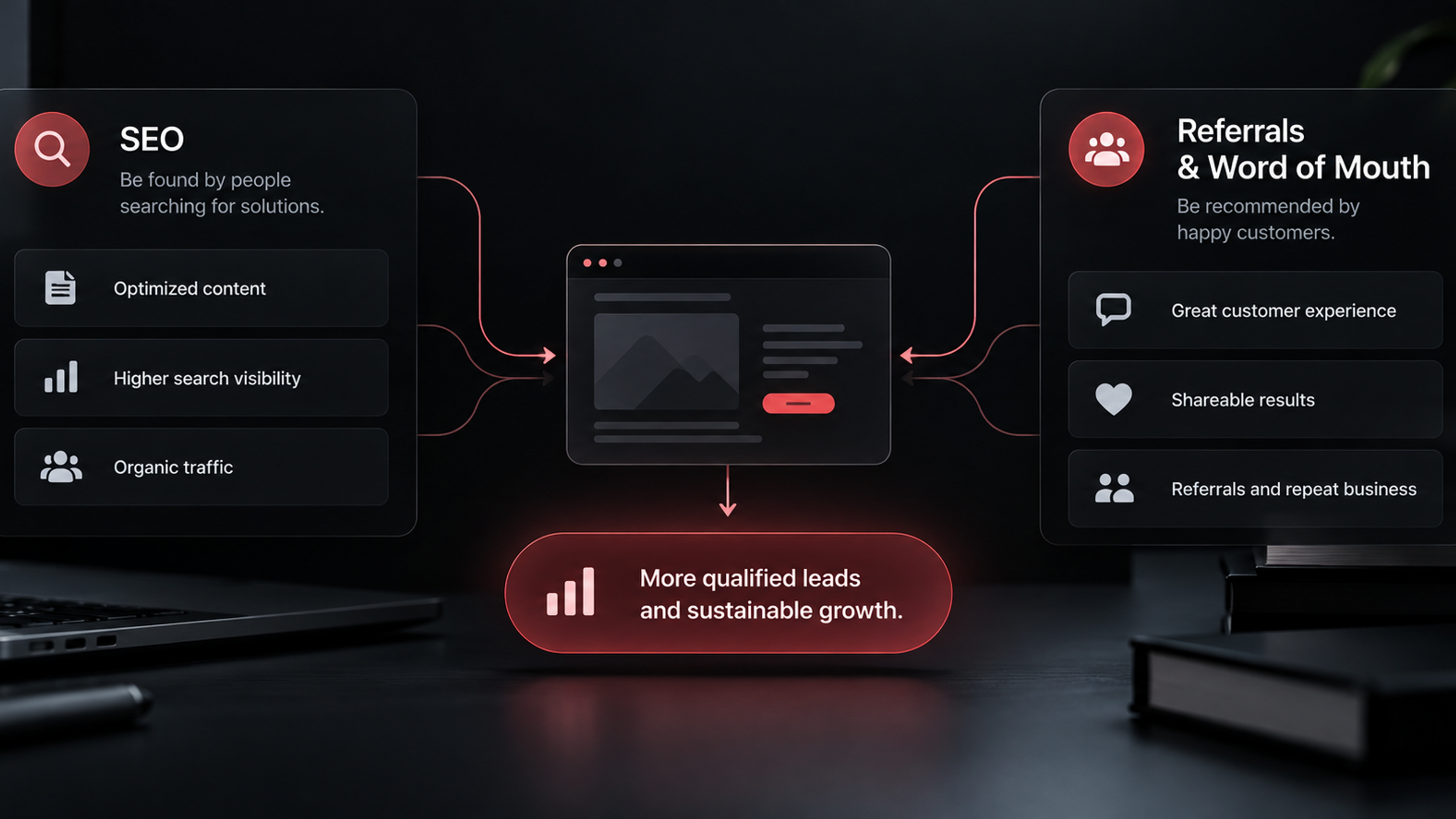
Clear, direct, answer-first writing matters for the extraction reasons already covered. And third-party corroboration matters more than most businesses account for: AI systems weighing which sources to trust and cite draw on signals beyond your own website, including how consistently other credible sites, reviews and mentions describe the same facts about your business. This connects directly to broader digital reputation work, reviews, consistent business information across directories, mentions in credible publications, rather than anything you can purely control through on-page technical changes to your own site.
Local and conversational intent still carry real weight
Even with the uncertainty around some of the more specific voice search statistics circulating, a consistent pattern holds across the more credible sources: voice and conversational queries skew heavily toward local intent, and the specific numbers on this, while they vary somewhat by study, consistently point toward a majority of this kind of query involving a nearby business, location or service. This has a very practical implication that predates the current AI search conversation and remains just as relevant inside it: a complete, accurate, consistently updated Google Business Profile, correct business hours, an accurate address, a current phone number, real categories, is foundational groundwork that both traditional local search and AI-driven conversational answers depend on.
Conversational queries themselves also tend to be phrased as full, natural questions rather than the clipped keyword fragments typing search has trained people to use, "where can I get my car's brakes fixed near downtown this weekend" rather than "brake repair downtown." Content that naturally answers full, specific questions in a complete sentence or two, rather than content built purely around short keyword phrases repeated for ranking purposes, tends to map more naturally onto how both voice queries and AI-generated answers are actually phrased.
Measuring whether any of this is actually working
Here's where the shift genuinely complicates things rather than just adding new tactics. Traditional analytics were built around clicks: a visit, a session, a conversion traced back through a referral source. A citation inside an AI-generated answer, or an answer delivered inside a chat interface that a user never clicks through from, generates none of that. Your website's traffic can look flat or declining while your brand is actually being mentioned and recommended more often than ever, simply because that exposure doesn't register in the analytics tools built for a clicking-based web.
A few practical adjustments help close this visibility gap, even if none of them fully solve it. Monitoring branded search volume, how often people search for your business by name specifically, can rise even as general informational traffic falls, and a rising branded search trend alongside falling informational traffic can be a reasonable signal that AI-driven exposure is building brand awareness even without direct clicks. Checking Google Search Console for queries with high impressions but very low click-through can reveal exactly the pattern a zero-click, AI-answered query produces: people are seeing your brand referenced, just not clicking through, which is different from simply not being found at all. And periodically, manually testing how your business or content is described when you ask ChatGPT, Perplexity, Gemini or Google's AI Mode a relevant question gives a rough, qualitative read on whether you're being cited accurately, inaccurately, or not at all, something no automated tool fully replaces yet given how new and fast-moving this measurement space still is.
Common mistakes worth avoiding
Chasing every new acronym-labeled tactic without checking whether a platform has actually confirmed it matters. The llms.txt example above is the clearest current case of this, but the pattern repeats constantly in a fast-moving space: a tactic gets heavily marketed by tools and agencies selling a service around it well before there's solid evidence it influences anything. A reasonable filter is checking whether the claim traces back to a platform's own documentation or an independent study, versus a vendor's own promotional content.
Writing exclusively for AI extraction at the expense of actual human readers. Content stripped down to terse, extractable fragments with no narrative flow or genuine depth often performs worse for both AI citation and human engagement than well-structured content that happens to also be clear and direct. The goal is content that's genuinely useful and well-organized for a person, which happens to also be easier for a machine to parse, not content optimized purely as a machine-readable answer fragment.
Treating this as a one-time technical project rather than an ongoing practice. Schema needs periodic re-validation as content changes, since markup that no longer matches what's actually on the page is treated as a trust problem rather than left alone. The broader landscape itself, which platforms confirm using which signals, how AI Overviews evolve, how citation patterns shift, is changing quickly enough that revisiting this topic every few months is more realistic than assuming a single round of changes covers the next several years.
Ignoring the reputation and corroboration layer while over-investing in on-page technical changes. Since AI systems weigh third-party signals, consistent business information across the web, reviews, mentions in credible sources, alongside your own site's content, a business that perfects its schema markup while leaving inconsistent, outdated listings scattered across directories and review platforms is optimizing only half the actual signal AI systems use to decide what to trust.
A sensible starting point
Start with the fundamentals that matter regardless of how this specific landscape evolves: confirm AI crawlers aren't blocked in robots.txt, make sure your content is actually present in server-rendered HTML rather than hidden behind client-side JavaScript rendering, and restructure your most important pages so each one answers a specific, clearly stated question early rather than building toward it gradually. Add or clean up schema markup as an accuracy layer, prioritizing Organization and Article-level markup that establishes who you are clearly, rather than chasing every schema type marketed as an AI visibility lever. Keep your business information, hours, address, categories, consistent everywhere it appears online, since that consistency feeds directly into the corroboration signal AI systems increasingly weigh.
From there, treat measurement as an evolving practice rather than a solved problem: watch branded search trends, check Search Console for the high-impression, low-click pattern that signals zero-click exposure, and periodically test how AI systems actually describe your business when asked directly. None of this guarantees a specific citation or a specific traffic outcome, and anyone promising a precise, guaranteed result in this space is overselling what's currently measurable. What it does is position a website on the right side of a shift that's clearly continuing, built on the parts of this topic that are genuinely documented rather than the parts that are mostly marketing.
Frequently Asked Questions
Not really, and treating it as entirely separate from general AI and conversational search optimization is increasingly outdated, since the large majority of voice interaction now happens through smartphones and assistants that blend voice input with text and AI-generated answers rather than through standalone smart speakers answering narrow spoken queries.
Given how quickly this specific landscape is evolving, including which signals platforms confirm they actually use, a review every few months is more realistic than treating any single round of changes as a lasting, complete solution.
No. The practices that genuinely help with AI citation, clear structure, accurate information, crawlable content, strong third-party corroboration, overlap heavily with sound, long-standing SEO practice rather than replacing it. Framing this as an either-or choice misreads how connected the two actually are.
It's low-effort enough that it doesn't hurt to have, mainly as internal documentation of your most important pages, but no major AI provider has confirmed using it as a citation signal, so it shouldn't be treated as a priority or assumed to meaningfully affect whether AI systems cite your content.
Watch for a specific pattern: overall informational traffic declining while branded search volume holds steady or rises, combined with high-impression, low-click-through queries showing up in Google Search Console. That combination suggests your content is being seen and referenced by AI systems without generating the clicks traditional analytics are built to measure.