Aisha Sharma
There is a stage in most growing businesses when technology stops being something one capable person can hold together.
The cloud bill has doubled without anyone quite knowing why. The website slows down at exactly the moments it matters. A larger customer sends over a security questionnaire that nobody feels confident answering. At that point, bringing in a technical consultant can save a great deal of money and stress, or, if you choose badly, add to both.
Choosing well comes down to four things: being clear about the problem you want solved, hiring the right type of specialist for that problem, testing how they think rather than what they claim, and setting up the engagement so that your business is stronger and more independent when it ends. This guide walks through each of those in turn, with a particular focus on cloud infrastructure, security and performance, where the stakes for growing businesses are highest and the market is hardest to read.
It is written for founders, operations leads and managers who are not necessarily technical themselves. You do not need to understand every acronym to make a good hiring decision. You do need to know which questions to ask and what a good answer sounds like.
Signs you need a technical consultant, and when you do not
The best time to hire a consultant is before a problem becomes a crisis, but in practice most businesses start looking after something has gone wrong. Either way, certain patterns suggest outside expertise will pay for itself.
One is cloud costs that rise faster than revenue. Unused servers, oversized databases, forgotten test environments and data transfer charges add up quietly. Flexera's annual State of the Cloud survey has consistently found that organisations estimate a large share of their cloud spend, typically somewhere around a quarter or more, is wasted. A consultant who specialises in cloud cost optimisation (often called FinOps) can usually find savings within weeks.
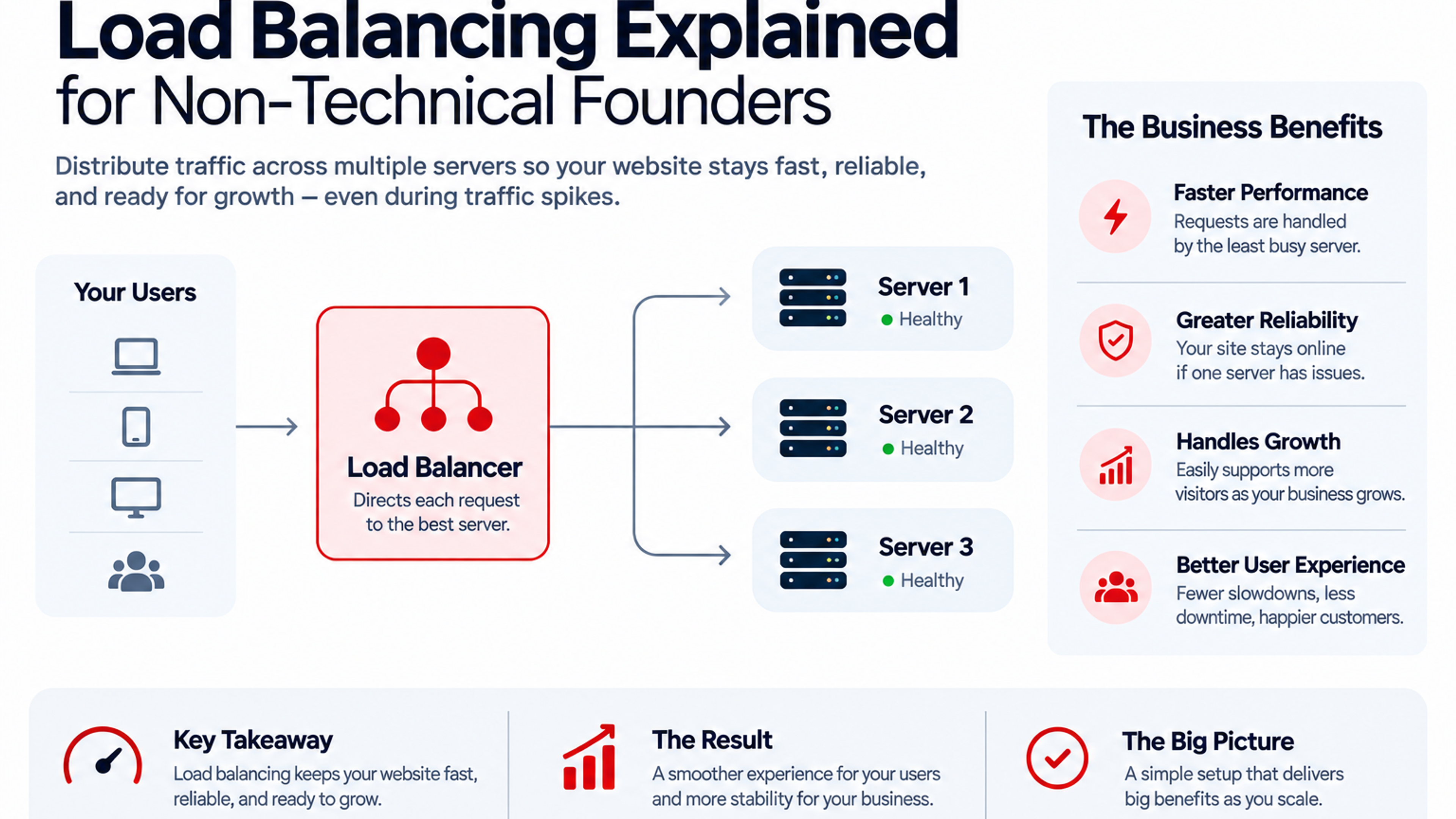
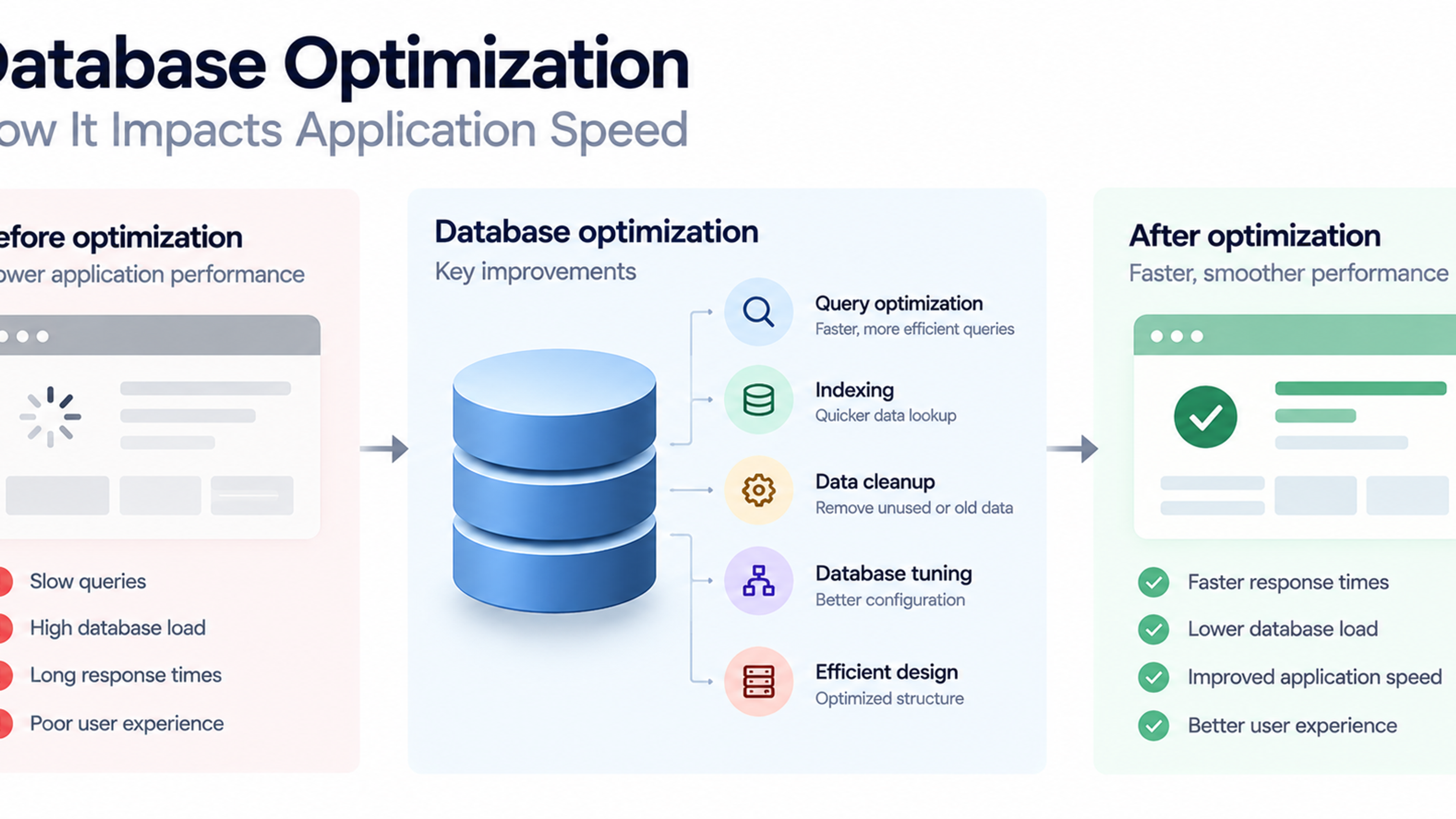
Another is performance that breaks under growth. If your application slows down, times out or fails during busy periods, the cause is often architectural: a single database doing too much, no caching, or infrastructure that cannot scale automatically. These problems tend to get worse and more expensive the longer they are left.
Security uncertainty is a third. Many growing businesses have no clear picture of who has access to what, whether backups actually restore, or how they would respond to an incident. The UK government's Cyber Security Breaches Survey 2025 found that 43 percent of UK businesses reported a breach or attack in the previous twelve months, with the figure higher for medium and large businesses. IBM's Cost of a Data Breach report puts the global average cost of a breach in the millions of dollars. Even for a small firm, a serious incident can mean lost revenue, regulatory exposure and damaged trust.
Compliance demands are a fourth. Enterprise customers increasingly ask for evidence of security controls, such as Cyber Essentials in the UK, ISO 27001 or a SOC 2 report. Preparing for these without experience is slow and frustrating.
Finally, there are big one-off changes: moving from on-premises servers to the cloud, switching cloud providers, rebuilding a legacy application or setting up your first proper development pipeline. These projects need specialist knowledge for a limited time, which is exactly what consultants are for.
When a consultant is the wrong answer
If the work is continuous, core to your product and expected to grow, a permanent hire may be better value. A consultant can help you design the role and interview candidates, but they should not become a permanent substitute for an internal team. Likewise, if your need is routine support, such as fixing laptops, managing user accounts and patching systems, a managed service provider (MSP) is usually more suitable and cheaper than a consultant billing by the day.
It is also worth being honest about whether you can act on advice. A brilliant assessment that sits in a shared drive because nobody has time to implement it is wasted money. Before you hire, make sure someone in the business owns the outcome.
The main types of technical consultant
"Technical consultant" covers a wide range of specialists, and hiring the wrong type is one of the most common mistakes. A brilliant security tester may not be the right person to redesign your cloud architecture, and an excellent DevOps engineer may not be the right person to advise the board on a three-year technology strategy.
Fractional CTO or technology strategist
A fractional chief technology officer works part-time, often a day or two a week, providing senior technical leadership without the cost of a full-time executive. This is the right choice when the questions are strategic: which technologies to invest in, how to structure a technical team, how to evaluate vendors, or how to prepare for investor due diligence. A good fractional CTO will often bring in specialists for hands-on work rather than doing it all themselves.
Cloud architect
A cloud architect designs how your systems run on platforms such as Amazon Web Services (AWS), Microsoft Azure or Google Cloud. Their work covers networks, compute, storage, databases, scaling, resilience and cost. Bring one in for migrations, major redesigns, multi-region or high-availability setups, or when your current environment has grown without a plan.
Security consultant
Security is a broad field, so it helps to be specific. Some security consultants focus on governance and compliance, such as policies, risk assessments and certifications. Others focus on technical assessment, including penetration testing, cloud security reviews and vulnerability management. Others specialise in incident response. A growing business often needs a generalist first, someone who can assess your overall position and set priorities, then specialists for particular tasks.
DevOps or site reliability engineer
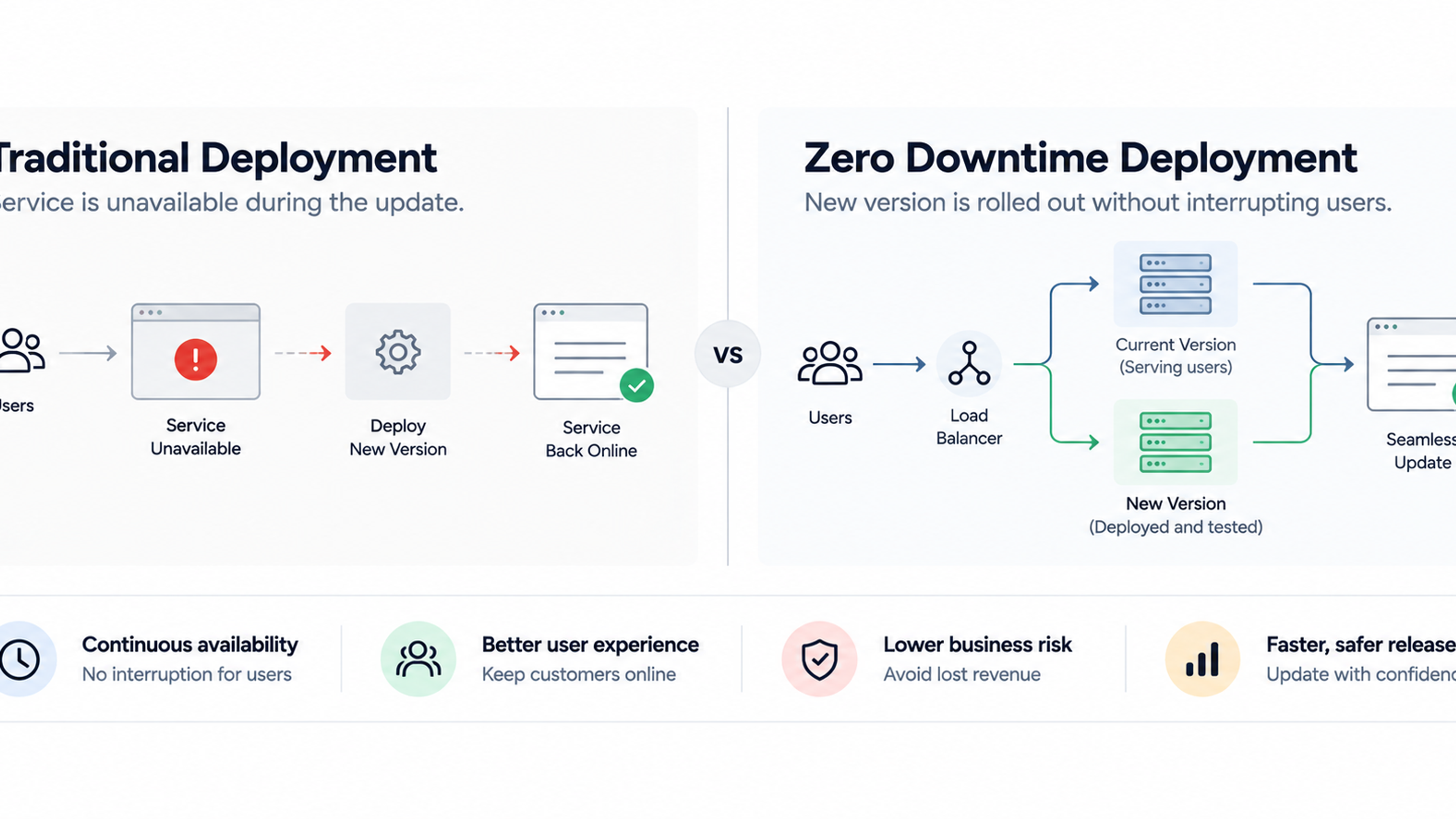
DevOps and site reliability engineering (SRE) consultants improve how software is built, deployed and operated. Typical work includes automated deployment pipelines, infrastructure as code, monitoring and alerting, and performance tuning. They are the people to call when releases are slow and risky or when you only find out about outages from customers.
Managed service providers and consultancies
An MSP provides ongoing operational support under a service agreement, while a consultancy provides a team of specialists for projects. Both can be valuable. The trade-off is that a firm offers continuity and breadth, while an independent consultant often offers deeper senior expertise per pound or dollar and a more direct relationship. Ask a firm who will actually do the work, because the senior person in the sales meeting is not always the person on the project.
Define the engagement before you start searching
A short written brief is the single most useful thing you can prepare. It forces you to clarify what you want, it lets you compare consultants on the same basis, and it protects you from paying someone to define the problem for you at full day rate.
The brief does not need to be technical. It should cover five things.
First, the business problem in plain language. "Our AWS bill has grown from roughly $4,000 to $11,000 a month over a year, and we cannot explain the increase" is far more useful than "we need cloud optimisation".
Second, the outcome you want. Describe what will be different when the work is done. For example: a 25 percent reduction in monthly cloud spend without affecting performance, a documented incident response plan the team has rehearsed, or a passing Cyber Essentials assessment by a specific date.
Third, your current environment. List the main systems, the cloud provider or providers you use, who manages them today and any documentation that exists. If you are not sure, say so. A good consultant will not expect perfection.
Fourth, the constraints. Note your budget range, deadlines, any compliance requirements and how much internal time your team can give the project. Consultants waste a lot of time on assumptions about access and availability.
Fifth, what you expect to own at the end. This might include architecture diagrams, runbooks, infrastructure code in your own repository, a prioritised list of risks, or training for your team. Writing this down early makes handover a requirement rather than an afterthought.
If you genuinely cannot define the problem, that is fine, but then the first engagement should be a small, fixed-price discovery or assessment. Its purpose is to produce the brief for the larger piece of work. Separating diagnosis from treatment also means you can take the findings to another consultant if you prefer.
What to look for: skills, certifications and evidence
Relevant, recent experience
The most valuable thing a consultant brings is pattern recognition: they have seen problems like yours before and know which fixes work. Look for experience with businesses of a similar size and stage, on the same cloud platform and with similar constraints. Someone who has spent a decade in large enterprises with dedicated security teams and generous budgets may struggle to recommend pragmatic, affordable fixes for a 40-person company, and vice versa.
Recency matters too. Cloud platforms change quickly. Services are launched, renamed and retired, and pricing models shift. A consultant whose hands-on experience ended several years ago may give advice that is no longer the best option.
Certifications: useful, but not proof
Certifications show that someone has studied a body of knowledge and passed an exam. The well-regarded cloud certifications include AWS Certified Solutions Architect (Professional level), Microsoft Certified: Azure Solutions Architect Expert and Google Cloud Professional Cloud Architect. In security, widely recognised credentials include CISSP, CCSP for cloud security, and offensive testing qualifications such as OSCP or, in the UK, CREST and CHECK accreditation for penetration testing. Kubernetes work is often backed by the CKA or CKS certifications.
Treat these as a baseline filter, not a decision. Plenty of excellent consultants hold few certifications, and some heavily certified ones have limited practical experience. What certifications do reliably tell you is that the person has invested in keeping their knowledge structured and current. For security testing in particular, accreditation such as CREST can also matter because some customers and insurers ask for it.
Evidence of real outcomes
Ask for two or three examples of past work that resemble your situation, described in terms of results. A strong answer sounds like: "A software company was spending about $30,000 a month on AWS. We rightsized their databases, moved steady workloads to savings plans and removed idle environments, and their bill fell by around a third within two months." Then ask to speak to that client. Many consultants work under confidentiality agreements, so they may not be able to name every client, but they should be able to put you in touch with at least one referee.
Communication and judgement
The consultants who add most value can explain technical trade-offs in business terms. They tell you what a risk could cost, how likely it is and what it would take to fix, so that you can decide. If someone cannot explain a recommendation without jargon, or seems irritated when you ask why, the engagement is likely to be difficult.
Good judgement also shows up as restraint. The right consultant will sometimes tell you that the expensive option is unnecessary, that your current setup is fine for the next year, or that you should solve a process problem before buying a new tool.
How to evaluate candidates in practice
CVs, websites and LinkedIn profiles tell you what a consultant wants you to know. The evaluation process should show you how they actually think. You do not need to be technical to run it well.
Start with a short list
Three candidates is usually enough. Good sources include recommendations from other founders in your sector, your cloud provider's partner directory (AWS, Microsoft and Google each list certified partners), professional bodies and specialist communities. Platforms for freelancers can work, but vetting matters even more there.
Ask questions that reveal thinking
In the first conversation, share your brief and listen to what they ask back. Strong consultants ask questions before offering solutions: who uses the system, what happens if it goes down, what you have tried already, what your budget is. A consultant who proposes a full solution within ten minutes, without understanding your business, is guessing.
A few questions work particularly well with non-technical interviewers.
- "Tell me about a project that went badly. What happened and what did you change?" Good consultants have clear, honest answers.
- "What would you not recommend for a business our size?" This tests whether they can fit advice to your scale.
- "How would you explain this risk to our board?" Their answer shows how they communicate.
- "What will we be able to do ourselves when you finish?" This reveals whether they plan for independence or dependency.
- "Which parts of this would you hand to someone else?" Honest specialists know their limits.
Where you have a technical person in-house, even a junior one, bring them into the conversation. They can judge the depth of answers in a way you may not be able to.
Use a small paid first engagement
The most reliable test is a short, fixed-scope paid engagement: a cloud cost review, a security assessment against a recognised framework, or a performance audit of one system. It should take days rather than weeks and produce a written report with prioritised recommendations.
This tells you almost everything you need to know. You see the quality of their work, how they communicate findings, whether they respect your time and access, and whether their recommendations make sense. Both sides can then decide whether to continue.
Look at whether the report is specific to your environment and ranks issues by risk and effort. A generic document padded with screenshots from automated scanning tools is a warning sign. For cloud reviews, many consultants structure their assessments around the provider's own guidance, such as the AWS Well-Architected Framework, whose six pillars cover operational excellence, security, reliability, performance efficiency, cost optimisation and sustainability. Using a recognised framework makes the findings easier to compare and revisit later. (Internal link suggestion: a guide to cloud security assessments or cloud cost optimisation.)
Red flags to watch for
Most poor consultant engagements show warning signs early. These are the ones worth taking seriously.
A solution before a diagnosis. If a consultant recommends Kubernetes, a full migration or a particular security platform before understanding your environment, they may be selling what they know rather than what you need.
Undisclosed commercial ties. Many consultants are partners of cloud providers or software vendors and may earn referral fees, discounts or credits. This is not necessarily a problem, but it should be disclosed. Ask directly whether they receive any payment or benefit from the products they recommend.
Fear-driven selling. Security consultants in particular sometimes lead with alarming headlines. Real risks exist, but good advisers put them in proportion and help you prioritise. If everything is described as critical, nothing can be prioritised.
Vague scope and open-ended billing. "We'll start and see how it goes" is a recipe for budget overruns. Even exploratory work should have a defined period, a budget ceiling and agreed checkpoints.
Reluctance to document or transfer knowledge. If a consultant resists writing things down, keeps infrastructure code in their own accounts or becomes evasive about handover, they may be building dependency, deliberately or not.
Requests for excessive access. A consultant reviewing your cloud costs does not need full administrator rights to every system, and nobody needs your personal passwords. How a consultant handles access is a useful test of their security habits, as the section on contracts and access explains.
No references or a history that cannot be checked. Confidentiality is normal, but a consultant with years of experience should be able to offer at least one referee, a verifiable professional profile or examples of published work.
Engagement models and what they cost
Rates for technical consultants vary widely by specialism, seniority, location and whether you hire an individual or a firm. Senior cloud architects and security specialists generally command higher day rates than generalists, and consultancies typically charge more than independents because their price covers account management, bench capacity and overheads. Rather than rely on published averages, which are often based on small samples, ask three shortlisted consultants to price the same brief. The spread will tell you more about your market than any survey.
What matters more than the rate is the model, because the model determines who carries the risk.
Fixed-price projects
A fixed price works well for clearly defined work, such as an assessment, a migration of a known set of systems or achieving a specific certification. You know the cost up front, and the consultant carries the risk of overruns. The trade-off is that changes are harder, and consultants build a margin for uncertainty into the price. Make sure the deliverables and acceptance criteria are written down precisely.
Time and materials
Paying by the hour or day suits work where the scope cannot be known in advance, such as investigating intermittent performance problems or supporting an internal team through a complex change. It is flexible but places the risk of overruns on you. Protect yourself with a budget cap, weekly time reports and regular reviews against agreed goals.
Retainers and fractional roles
A monthly retainer buys a set amount of time or availability, which suits ongoing advisory work, fractional CTO arrangements or a standing security adviser. Be clear about what is included, how unused time is handled and the response times you can expect in an emergency.
Outcome-based pricing
Some cloud cost consultants charge a share of the savings they deliver. This aligns incentives but needs careful definition. Agree how savings are measured, over what period, and how to treat changes that would have happened anyway, such as a planned reduction in usage.
Whichever model you choose, budget for your own team's time. Consultants need answers, access and decisions, and an engagement stalls quickly if nobody internally can provide them.
In the UK, if you engage an individual contractor through their own limited company, check whether the off-payroll working rules (IR35) apply. Medium and large businesses are responsible for determining the contractor's employment status; small businesses that meet the relevant thresholds are generally exempt, but the rules are detailed, so take advice if in doubt.
Contracts, access and security during the engagement
Bringing in a technical consultant means giving an outsider access to some of your most sensitive systems. Getting the contract and access arrangements right protects you if anything goes wrong, and it also tests whether the consultant takes security seriously.
What the contract should cover
A written agreement should set out the scope, deliverables, fees, payment terms and how changes are approved. Beyond the basics, a few clauses matter especially for technical work.
Intellectual property should be assigned to you for anything created specifically for your business, including infrastructure code, scripts, configurations and documentation. Consultants may reasonably keep ownership of their general tools and methods, but you should have a perpetual right to use anything delivered.
Confidentiality and data protection terms should reflect the data the consultant may see. If they could access personal data, UK GDPR or the EU GDPR may require a data processing agreement setting out how that data is handled.
Insurance is worth checking. Professional indemnity cover protects you if the consultant's advice causes a loss, and some clients also ask for cyber insurance. Ask for evidence and check that the limits are proportionate to the work.
Finally, include clear termination and handover terms, so that if the relationship ends early, you still receive the code, credentials and documentation produced so far. (Internal link suggestion: an article on IT supplier contracts or vendor risk management.)
Give access the safe way
The principle to follow is least privilege: give each person the minimum access they need, for as long as they need it. In practice, that means several things.
Create a named account for each consultant. Never share an existing employee's login or the cloud provider's root or global administrator account. All three major cloud providers support identity and access management (IAM) roles that can be scoped to particular services and actions, and many allow temporary credentials that expire automatically.
Start with read-only access for assessments, then grant write access only for the specific systems the consultant is changing. Require multi-factor authentication on every account. Turn on logging, such as AWS CloudTrail, Azure Activity Log or Google Cloud Audit Logs, so that you have a record of what changed and when.
Keep infrastructure code and documentation in repositories your business owns, such as a company GitHub or GitLab account, with the consultant added as a collaborator. Store shared secrets in a proper secrets manager or business password manager rather than in emails or chat messages.
When the engagement ends, remove access the same day and rotate any credentials the consultant may have seen. Many breaches involve stolen or misused credentials, so this simple step closes a common gap. Verizon's annual Data Breach Investigations Report has repeatedly identified the use of stolen credentials as one of the most common ways attackers gain access.
Measuring success and planning the handover
A consultant engagement should end with your business more capable than when it began. That only happens if success is defined in advance and handover is treated as part of the work, not something squeezed into the final afternoon.
Agree how success will be measured
Return to the outcomes in your brief and attach measures to them before work starts. For cloud cost work, that might be monthly spend compared with a baseline, adjusted for growth in usage. For performance, it could be page load times, error rates or the ability to handle a stated level of traffic, ideally confirmed through load testing. For security, useful measures include the number of high-risk findings resolved, the percentage of accounts protected by multi-factor authentication, a tested backup restore or a passed certification.
Agree the baseline at the start, because it is surprisingly easy to lose track of where you began. Short fortnightly or monthly check-ins against these measures keep the work focused and make it obvious early if something is off track.
Make handover a deliverable
A strong handover usually includes up-to-date architecture diagrams, runbooks explaining how to deploy, monitor and recover key systems, infrastructure code with clear instructions, a list of remaining risks with recommended next steps, and one or more working sessions with the people who will look after things afterwards. Ask for these explicitly in the contract and allow time for them in the plan.
A practical test is to ask someone on your team to carry out a routine task, such as deploying a change or restoring a backup, using only the documentation, while the consultant is still available to help. Gaps become obvious very quickly.
Decide what happens next
At the end of the engagement, decide deliberately between three options: take the work fully in-house, move to a lighter retainer for advice and occasional reviews, or hand ongoing operations to a managed service provider. Many growing businesses find that a short annual review, such as a cloud architecture or security health check, is a cost-effective way to catch drift before it becomes a problem.
If your business is approaching a point where cloud infrastructure, security and performance are core to how you serve customers, it can be worth talking to an experienced adviser about a roadmap rather than a single fix. The right consultant will help you build that plan and be clear about which parts your own team can own. (Internal link suggestion: a cloud infrastructure or security services page, or a guide to building a cloud security roadmap.)
Frequently Asked Questions
A technical consultant assesses your systems, advises on how to improve them and often helps implement the changes. Depending on their specialism, that may mean designing cloud infrastructure, improving security, speeding up applications, automating deployments or setting technology strategy. Unlike an employee, they are usually engaged for a defined piece of work or a set amount of time.
A consultant typically solves a specific problem or delivers a project, then hands over. A managed service provider takes ongoing responsibility for running parts of your IT, such as monitoring, patching and helpdesk support, under a service agreement. Many businesses use a consultant to design or fix something and an MSP to run it day to day.
An independent consultant often gives you direct access to senior expertise at a lower overall cost. A firm offers broader skills, more capacity and continuity if one person is unavailable. For a focused assessment or advisory role, an individual is often ideal. For a large migration or round-the-clock support, a firm may be safer.
Assessments and audits often take one to three weeks. Implementation projects, such as a cloud migration or a certification programme, commonly run for several months. Fractional and advisory roles can continue for a year or more, usually reviewed every quarter.
No. You need a clear brief, good questions and a structured way to compare candidates. A small paid assessment, references and an honest conversation about past mistakes will tell you a great deal. If the decision is large, it can help to ask a trusted technical contact to join one interview.
Good recommendations are specific to your environment, explain the business impact, are ranked by risk and effort, and include a realistic estimate of what each change will take. If you are unsure, you can ask a second consultant to review the findings, which is far cheaper than acting on poor advice.