Aisha Sharma
A business that hasn't automated anything yet rarely feels like it's losing money.
Payroll gets run, invoices go out, customers get served, nothing visibly breaks. That's exactly what makes delay such an easy decision to keep making. The cost of not automating doesn't show up as a line item. It shows up as a slightly slower lead response, a slightly higher error rate, a slightly thinner margin, repeated every week, compounding quietly until the gap between you and a competitor who automated two years ago is too wide to close with better effort alone.
This article is about that quiet compounding. Not the sales pitch version of automation, which tends to promise transformation overnight, but the more honest accounting of what delay actually costs, where that cost hides, and why the businesses that wait usually end up paying more to catch up than they would have spent moving earlier. It's worth saying upfront that automation isn't a guaranteed win either. Some of the research behind this article is just as useful for showing where automation investments have failed as for showing where delay has cost real money, and a fair treatment of this topic has to hold both of those truths at once.
Why delay feels safe and usually isn't
Avoiding automation looks like saving money on the surface. No new software to buy, no implementation project, no disruption to a process that currently works, even if it works slowly. That framing is accurate as far as it goes, but it only accounts for the upfront cost side of the ledger. It leaves out everything that keeps happening on the other side: the labor hours spent on repetitive work that a tool could handle, the leads that go cold because nobody responded fast enough, the errors that creep into manual processes at a scale a machine wouldn't make.
McKinsey's research on automation adoption found that 66 percent of organizations had adopted automation in at least one business function as of 2026, up from 57 percent the year before. That's a meaningful majority already moving, and the pattern McKinsey and others describe isn't universal transformation, it's broad but shallow adoption: a majority of businesses have automated one function while leaving most of the rest manual. The businesses still entirely undecided aren't comparing themselves against some hypothetical automated future. They're already behind a majority of their peers on at least the basics, and the gap between "we automated one thing" and "we haven't started" is itself a competitive difference worth taking seriously.
Where the hidden costs actually accumulate
Lost revenue from slow, inconsistent customer response
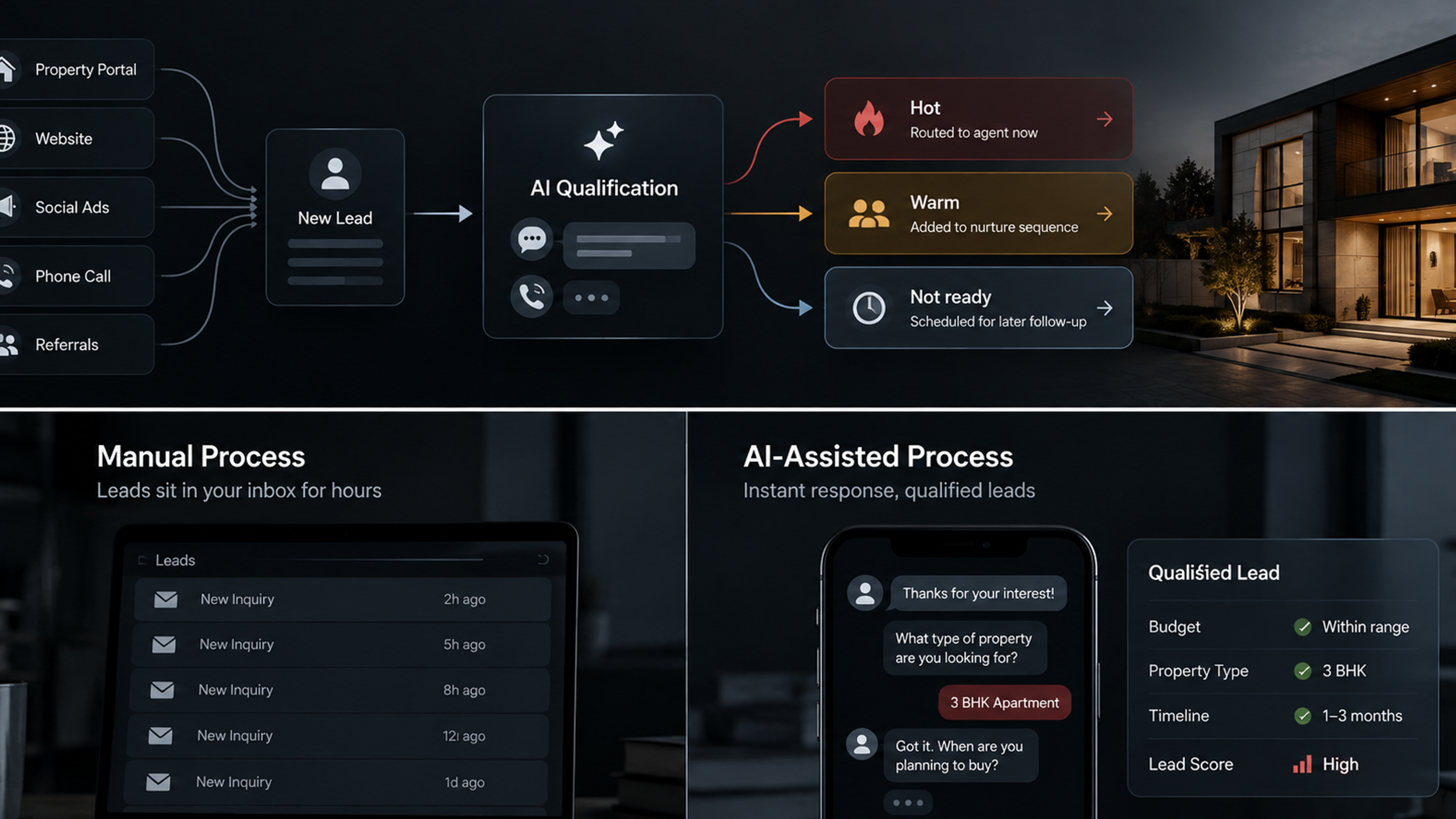
The most measurable category of delay cost sits in how quickly and consistently a business responds to the people trying to buy from it. When inquiries, quotes or follow-ups depend entirely on a person being available, responsive and consistent, you're building in variability that automated systems don't have. A lead that comes in at 6 p.m. on a Friday either waits until Monday for a response, or it goes to whichever competitor replies first.
This connects directly to the industry research on lead response time covered extensively in discussions of AI-driven lead qualification: the businesses that respond within minutes convert dramatically more often than those that respond within hours, and research specifically on automated lead management has found it can lift revenue meaningfully, some estimates putting the gain around 10 percent within six months of adoption, within a window that would otherwise be lost entirely to slow manual follow-up. A business delaying automation of this single function isn't just operating a little less efficiently. It's handing a measurable share of its addressable revenue to whichever competitor already closed that gap.
Labor cost spent on work that doesn't need a human
Every manual process that a tool could handle instead is a recurring labor cost that never goes away on its own. Data entry, invoice generation, status updates, scheduling, appointment reminders: none of these individually look expensive when one person does them for twenty minutes a day. Multiplied across a team, across a year, across every similar task nobody's gotten around to automating, the aggregate labor cost is often larger than the business realizes, specifically because it's distributed across many small, easy-to-ignore pockets of time rather than concentrated in one obvious line item.
This is the part of automation's case that's easiest to underestimate and easiest to prove once you actually measure it. A task audit, tracking how many times a specific manual task happens per week and how long it takes, almost always reveals more aggregate hours than anyone guessed before counting. Forrester's Total Economic Impact research on workflow automation platforms found a 248 percent three-year return on investment across the deployments it studied, a figure driven substantially by exactly this kind of recovered labor time rather than any single dramatic efficiency gain.
Errors that compound at a scale manual review can't catch
Manual processes don't just cost time, they cost accuracy, and the error rate on repetitive manual work tends to rise, not fall, as volume increases and fatigue sets in. A data entry mistake on invoice number four hundred of the month is more likely than on invoice number four, and the downstream cost of that error, a wrong billing amount, a missed compliance field, a shipment sent to the wrong address, often costs considerably more to fix after the fact than it would have cost to prevent through an automated validation step in the first place.
KPMG's research on finance teams specifically found a striking split on this point: organizations with mature, well-governed automation reported a 33 percent error reduction rate, while organizations running automation without the same level of governance and assurance saw only a 6 percent reduction. That gap matters for this article's argument in both directions. It confirms that automation genuinely reduces errors when implemented well, and it's a useful warning that simply adopting a tool without proper process design doesn't automatically deliver that benefit, a point worth returning to later.
The widening competitive gap, and why catching up later costs more than starting earlier would have
This is the least visible cost and the most consequential one over a longer horizon. A competitor that automated a core process two years ago isn't just running that one process more efficiently today. They've spent two years accumulating the operational data, the process refinements, and the staff familiarity that come from actually using a system under real conditions, not from a demo. A business starting from zero doesn't just need to implement the same tool. It needs to recreate two years of learning, tuning and institutional knowledge that the earlier adopter already has, and that gap doesn't close the moment you flip the switch on a new system.
Several industry analyses of AI and automation delay describe this using the language of compounding technical and data debt: the longer a business waits, the more its first year of eventual adoption becomes consumed by data cleanup and process re-engineering rather than genuine value creation, because the underlying data and workflows have kept accumulating inconsistency the whole time nobody was paying attention to them. This is worth taking seriously without overselling it into panic. It's not that a six-month delay dooms a business permanently. It's that the cost of catching up rises the longer the gap persists, in a way that simple "we'll automate when we're ready" planning tends to underestimate badly.
McKinsey Global Institute's broader estimate puts a number on part of this gap at the economy-wide level, suggesting AI-driven automation adoption could add roughly 1.2 percentage points of annual productivity growth globally over the coming decade. That's an aggregate, economy-level figure, not a guarantee for any individual business, but it's a useful signal of the scale of the shift happening around any single company's decision to wait.
Talent and hiring pressure building on top of the operational gap
A subtler cost shows up in hiring. Employees, particularly those with technical and analytical skills, increasingly weigh how modern and efficient a company's internal tools and processes are when deciding where to work, and businesses still running everything manually face a harder time attracting and retaining the people who'd otherwise help them close the operational gap. This creates an uncomfortable loop: the businesses that most need to catch up on automation are often the same ones struggling hardest to hire the people who could help them do it, because skilled candidates increasingly route around employers whose internal operations look stuck in an earlier era.
Where industry-specific pressure is highest
The cost of delay isn't uniform across every business, and it's worth being specific about where it bites hardest. In customer-facing functions, sales and support, response-time-sensitive industries face the sharpest, most immediate cost, since the competitive effect of a faster-responding rival shows up within weeks rather than years. In finance and operations, the cost shows up more slowly but compounds more severely, since manual processes here tend to carry higher error costs and the fixes required once a problem surfaces, a miscalculated close, a compliance gap, tend to be expensive and disruptive precisely because they went unnoticed for a while.
In supply chain and logistics, McKinsey's research on AI-enabled distribution found cost reductions in the range of 5 to 20 percent and inventory reductions of 20 to 30 percent among adopters, which gives a sense of how material the gap can be in operationally intensive sectors where margin improvements compound directly into competitive pricing power. Businesses in these categories that delay aren't just missing an efficiency gain. They're operating at a structural cost disadvantage against competitors who can price more aggressively because their underlying operations cost less to run.
The honest counterweight: automation done poorly costs just as much
None of this is a case for rushing into automation without a plan, and the research is clear enough on this point that ignoring it would make this article dishonest. MIT's Project NANDA, drawing on more than 300 public deployments alongside interviews and surveys, reported that a striking 95 percent of organizations studied were getting zero measurable return from their generative AI investments. Gartner, separately, projects that more than 40 percent of agentic AI projects will be cancelled by the end of 2027, citing unclear value, poor cost control and weak risk governance as the recurring reasons. Deloitte's research on AI investment found that while a large majority of organizations increased AI spending over the past year, only a small fraction saw return within twelve months, with most organizations needing two to four years to reach a satisfactory return even when the underlying investment is sound.
This matters for the argument about delay, not against it, in a specific way: these failures are overwhelmingly failures of implementation and governance, not evidence that automation itself doesn't pay off. KPMG's finding that well-governed automation delivered a 33 percent error reduction against just 6 percent for poorly governed deployments is the clearest version of this split. The cost of delay is real. So is the cost of automating a broken process without fixing the process first, or adopting a tool with no clear measurement of what success looks like, or treating implementation as a one-time project rather than an ongoing discipline. The right conclusion isn't "automate immediately regardless of readiness." It's "the cost of waiting is real and compounding, and the cost of rushing in badly is also real, which is why the planning phase matters as much as the decision to start."
What this means for deciding when to move
The useful question isn't "should we automate everything now." It's "which specific delay is costing us the most today, and is that cost rising." A few practical ways to answer that honestly.
Run an actual task-time audit before deciding anything. Rather than guessing which processes are worth automating, track how often a handful of candidate tasks happen and how long each one takes across the team for two or three weeks. The aggregate number this produces is almost always larger than intuition suggests, and it gives you a real, specific baseline to weigh against the cost of any automation investment, rather than a vague sense that things feel slow.
Separate the processes where delay compounds fastest from the ones where it doesn't. Customer-facing response time and anything tied directly to revenue conversion tends to compound the fastest, since a slow process there is actively losing business every week it continues, not just costing internal labor hours. A back-office reporting process that's inefficient but not actively losing revenue carries a real cost too, but it compounds more slowly and can reasonably wait a cycle or two longer if resources are constrained.
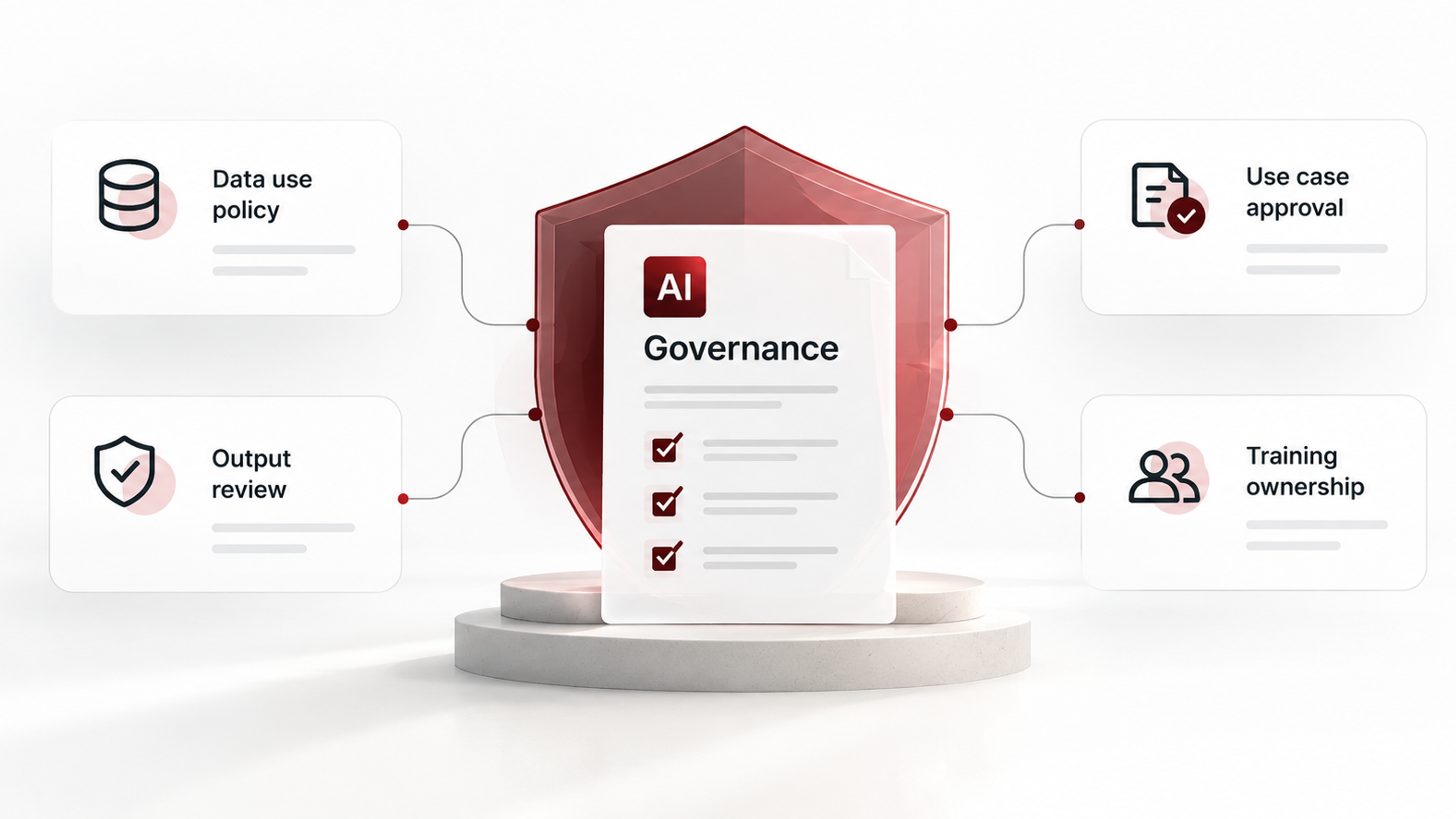
Treat the first automation project as a test of governance, not just technology. Given how starkly the research splits between well-governed and poorly governed automation outcomes, the first project worth automating is often not the most complex one but the one where you can build the measurement, ownership and review discipline that KPMG's error-reduction data suggests actually determines whether automation pays off. Getting that discipline right on a smaller, well-scoped project makes every subsequent automation effort more likely to succeed, which matters more for long-term outcomes than which specific process you start with.
Revisit the decision on a defined schedule rather than letting it default to inaction. The businesses most exposed to the cost of delay are rarely the ones who deliberately decided against automation after weighing the evidence. They're the ones who never revisited the question after an initial "not yet," while the underlying cost of waiting kept rising in the background. Setting an explicit date to reassess, three months, six months, forces the decision back onto the table instead of letting default inertia make it by omission.
Common mistakes that make the delay worse than it needs to be
Waiting for a perfect, comprehensive plan before automating anything. Ironically, the instinct to plan thoroughly before acting, while generally sound, often becomes its own form of delay when it turns into an indefinite search for the ideal comprehensive strategy rather than a willingness to start with one well-scoped, well-measured process and build from there. The research on implementation failure doesn't suggest moving slowly protects you; it suggests moving without governance hurts you, and those are different things.
Assuming the cost of delay is the same across every function. Treating a slow customer response process and a slow internal reporting process as equally urgent misallocates attention. The processes tied most directly to revenue and competitive response time deserve priority precisely because their cost compounds fastest, while lower-stakes internal processes can reasonably wait without the same urgency.
Underestimating how much the catch-up cost rises over time. The data-debt and process-reengineering cost described earlier isn't a one-time penalty; it grows the longer a business waits, because the underlying data and workflows keep accumulating inconsistency the entire time nobody addresses them. A business that assumes it can automate just as cheaply in two years as it could today is often making a costly miscalculation, particularly in operationally complex functions where manual workarounds tend to proliferate the longer they're left unaddressed.
Treating a single automation project as the finish line rather than the start of an ongoing discipline. The broad-but-shallow adoption pattern McKinsey describes, where two-thirds of businesses have automated one function and left the rest untouched, shows how easily automation stalls after an initial win. Treating the first success as proof that the hard part is done, rather than as the foundation for a continuing program, is a common reason businesses plateau well short of the gains available to them.
A sensible way to move forward
The honest version of this topic isn't "automate everything immediately" or "wait until conditions are perfect." It's that delay carries a real, measurable, and compounding cost, concentrated most heavily in customer-facing response time, accumulated labor hours, and the growing operational gap against competitors who've already started. At the same time, rushing into automation without the governance and measurement discipline the research consistently points to is its own expensive mistake, one that explains why so many automation projects fail to deliver the return their sponsors expected.
The practical answer sits between those two failure modes: run a genuine audit of where time and errors are actually accumulating, prioritize the processes where delay compounds fastest, and build measurement and ownership into the first project rather than treating technology selection as the only decision that matters. Businesses that do this tend to avoid both costly extremes, the slow bleed of unmeasured delay and the wasted investment of ungoverned automation, and end up in the smaller group actually capturing the return the rest are still waiting to see.
Frequently Asked Questions
A simple task-time audit is the most reliable signal. If tracking your team's time for a couple of weeks reveals a meaningful number of hours spent on repetitive, rule-based tasks, or if your response time to customer inquiries is measured in hours rather than minutes, those are concrete indicators that delay is already costing you, regardless of how the business feels day to day.
The research on governance versus ungoverned automation strongly favors doing one process well first. A single well-measured, well-governed automation project builds the discipline and credibility to expand further, while automating several processes quickly without that foundation is exactly the pattern associated with the high failure rates seen in broader industry research.
It varies by function and complexity, but multiple industry studies converge on a timeline of roughly one to four years depending on scope, with simpler, well-scoped projects often showing measurable gains within the first year and more complex, enterprise-wide efforts taking longer. Expecting an immediate, dramatic return across the board is itself a common source of disappointment and premature project cancellation.
The specific numbers differ, since large enterprises often have more complex processes and more to lose from inefficiency at scale, but the underlying dynamic, slow response times losing customers and manual labor costs accumulating quietly, applies at any size. A smaller business may feel the lost-revenue side of this, particularly around lead response time, more acutely relative to its overall size, since each lost customer represents a larger share of total potential revenue.
For most businesses, the process most directly tied to customer response time and revenue conversion, such as lead follow-up or initial customer inquiry handling, tends to offer the clearest, fastest-compounding cost of delay and the most measurable return once addressed, making it a reasonable default starting point when resources only allow for one initial project.